Tesla’s Mumbai showroom opening almost here: Why did its India debut take years?
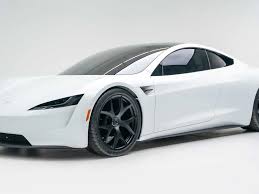
After years of speculation, delays, and countless tweets from Elon Musk, Tesla is finally preparing to make its formal entry into the Indian market. The electric vehicle giant is set to open its first showroom in Mumbai — a move that could mark a turning point for India’s evolving EV ecosystem. While Tesla’s upcoming Bandra Kurla Complex (BKC) showroom is nearing completion, one critical question lingers: Why did it take Tesla so long to arrive in India?
The answer lies in a complex mix of policy roadblocks, market uncertainty, and Tesla’s own global strategy.
A Journey That Started with a Tweet
Back in 2016, Tesla CEO Elon Musk hinted at bringing the EV revolution to India. His tweets sparked excitement across the country, and Indian fans of the brand couldn’t wait to see the sleek Model S and Model 3 on local roads. Fast forward to 2021, and Tesla officially registered its India arm — Tesla India Motors and Energy Pvt Ltd — in Bengaluru. Optimism surged. Many believed the cars would soon follow.
But years passed. No showroom opened. No deliveries happened. What went wrong?
1. High Import Duties and the Tax Tussle
One of the biggest stumbling blocks for Tesla was India’s extremely high import taxes. Any fully imported electric car priced above $40,000 faces a whopping 100% duty. That meant even Tesla’s “affordable” Model 3 could cost upwards of ₹60–70 lakhs in India — making it inaccessible to most buyers.
Tesla urged the Indian government to lower import taxes on electric vehicles to allow them to test the market before committing to a local factory. The Indian government, however, remained firm. It wanted manufacturing and job creation first, before considering tax breaks.
This policy stalemate delayed Tesla’s plans significantly. For a brand used to entering markets on its terms, India’s stand was a tough pill to swallow.
2. EV Infrastructure Still in Progress
Tesla isn’t just a car company — it’s also a charging infrastructure provider. In countries like the U.S. and China, its Supercharger network plays a major role in the ownership experience. India, however, still lacks a widespread EV charging infrastructure, especially outside big metros.
Tesla may have been concerned that launching in India without a strong charging network would lead to poor user experience and brand damage. Without reliable charging, long-distance travel in a Tesla could become inconvenient — a risk the company wasn’t ready to take.
3. India’s Price-Sensitive Market
Tesla’s vehicles are positioned as premium electric cars, appealing to the luxury and upper-middle-class segments. But India remains a highly price-sensitive market, where even ₹30 lakh for an EV is considered steep. Local competitors like Tata Motors, MG, and Mahindra already offer EVs starting under ₹10 lakh.
Until Tesla manufactures locally or introduces a truly budget EV (like the rumored “Model 2”), it will be a niche player catering mostly to the wealthy in urban centers.
4. Changing Government Signals and Mixed Messaging
Another challenge Tesla faced was the lack of consistent messaging from Indian authorities. While some government officials welcomed Tesla and encouraged investment, others were more reserved or even critical of the company’s demands for lower taxes without local manufacturing.
At times, this created confusion around India’s EV policy. For a multinational company considering a significant investment, policy clarity is critical — something that was often missing.
5. Global Priorities Took Precedence
It’s also worth noting that Tesla was navigating global expansion, supply chain shortages, and increasing competition in markets like the U.S., Europe, and China. With new Gigafactories launching in Texas and Berlin, India may have simply not been at the top of Tesla’s priority list.
Meanwhile, the EV landscape was shifting rapidly. In 2023 and 2024, Tesla faced slowing global sales and growing pressure from Chinese rivals like BYD. That may have prompted the company to finally reconsider India more seriously.
What’s Different Now?
Several recent developments suggest that Tesla is ready to hit the accelerator on its India plans:
- A premium showroom is nearly ready in Mumbai’s BKC, a clear sign of local activation.
- Discussions have reportedly resumed with Indian authorities about setting up a manufacturing facility, possibly in Gujarat or Maharashtra.
- India’s EV market is finally maturing, with over 1.5 million EVs sold in FY 2023–24, and significant public investment in EV charging and battery storage.
The Road Ahead: Showroom First, Factory Next?
The Mumbai showroom is expected to showcase Tesla’s popular models — likely the Model 3 and Model Y — which could be sold through the Completely Built Unit (CBU) route initially. But given the high prices, sales will be limited to a small group of buyers.
However, industry experts believe this showroom is not the endgame, but the beginning of a larger strategy. If Tesla can secure land and regulatory approvals, it may build a Gigafactory in India, enabling mass production and eventually launching affordable EVs tailored to Indian needs.
A locally manufactured Tesla could start under ₹25–30 lakhs, a price point that opens the door to broader adoption.
Final Thoughts
Tesla’s Mumbai showroom marks the end of a long wait and the start of a bold new chapter. The years of delay were shaped by taxes, policy debates, and strategic hesitations — but those hurdles seem to be clearing.
For Tesla, India offers not just a growing market, but also a strategic manufacturing base and access to a skilled labor force. For India, Tesla’s arrival could raise the bar for innovation, sustainability, and electric mobility.
If the pieces fall into place — factory, infrastructure, policy — India could become one of Tesla’s most exciting new frontiers. And for millions of Indian Tesla fans, the dream of seeing those futuristic EVs on the road may finally come true.