Quick analysis: How Praggnanandhaa beat Magnus Carlsen at Las Vegas Freestyle event
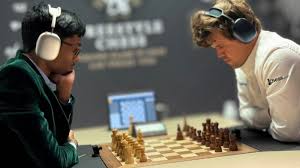
In a jaw-dropping moment at the 2025 Freestyle Chess Grand Slam in Las Vegas, India’s teenage prodigy R Praggnanandhaa delivered one of the most memorable victories of his career by defeating reigning world number one Magnus Carlsen. The win, which came during the group stage of this innovative no-opening-books chess format, not only shocked the chess world but also knocked Carlsen out of title contention in dramatic fashion.
This wasn’t just another upset. It was a calculated dismantling of one of the greatest players the game has ever seen — and it cemented Praggnanandhaa’s reputation as a formidable force in all chess formats.
🔀 What is Freestyle Chess?
The Freestyle Chess Grand Slam series is the latest innovation in the game, combining elements of classical, rapid, and blitz formats but with a twist: no pre-set openings or opening preparation. Each game starts with a randomized position for the back-rank pieces, similar to Chess960, but with standard chess rules thereafter.
This format tests raw skill, creativity, and the ability to adapt — a true test for even the most seasoned players. Opening knowledge is minimized, and instinct and tactical clarity take center stage.
🎯 The Game That Shook the Chess World
During Round 4 of Group White, Praggnanandhaa faced Carlsen in what seemed like a routine pairing on paper. However, what followed was anything but.
From the very beginning, Praggnanandhaa played with a quiet confidence. He didn’t shy away from complexities and instead embraced the unknown board structure, navigating through complications with the calmness of a seasoned veteran.
🔹 Opening Brilliance
While Freestyle Chess eliminates traditional preparation, it amplifies the value of early decision-making. Praggnanandhaa pushed early with a brave pawn advance, catching Carlsen off guard. On move 10, the Indian grandmaster launched a b5 pawn thrust that opened up the queenside and gave him spatial control. Carlsen responded with cxd4, a move that opened lines but left him vulnerable to center attacks.
Then came 12.Nf5 — a move hailed by commentators as “sniper-like.” With that knight maneuver, Praggnanandhaa seized the momentum. His piece placement was elegant, pressuring Carlsen’s king position without overcommitting.
⏳ Time Management Mastery
Freestyle Chess games at the Las Vegas Grand Slam are played with 10 minutes per player and a 10-second increment per move. Carlsen began with a slight clock advantage due to seeding rules, but by move 12, he had burned through most of it. He was left with less than 20 seconds on his clock, while Praggnanandhaa still had over three minutes.
This imbalance added further pressure to Carlsen’s already fragile position. Under time duress, the Norwegian legend began to slip, misjudging tactical responses and failing to find the best defensive resources.
Praggnanandhaa maintained composure, making rapid yet accurate moves that forced Carlsen into a passive and reactive stance.
♟️ Positional Domination
By the time the queens were off the board, it was clear that the tide had turned entirely. Praggnanandhaa emerged with a clear two-pawn advantage, and his pieces were more active. Carlsen’s king, unusually vulnerable in a middle-game scenario, had little shelter left.
Praggnanandhaa’s technique from this point was clinical. He patiently advanced his pawns and improved his king’s position, offering no counterplay. His conversion was so smooth that many likened it to watching an endgame tutorial.
Carlsen resigned after 39 moves — a rare early resignation for someone known for his resilience in lost positions.
🧠 Psychological Edge
What made this victory even more remarkable was the psychological battle. Carlsen, who had previously defeated Praggnanandhaa in multiple formats, seemed rattled by the youngster’s calmness and aggression. The pressure of the new format, combined with time trouble and unfamiliar positions, clearly played into Praggnanandhaa’s hands.
This wasn’t just a tactical win — it was a mental masterclass. Praggnanandhaa not only outplayed Carlsen on the board but also outthought him in terms of pacing, risk-taking, and positional choices.
🏆 The Bigger Picture
This victory has broader implications for the chess world. Not only did it eliminate Carlsen from the top bracket, but it also reinforced Praggnanandhaa’s standing as a complete player — someone who can thrive in classical, rapid, blitz, and now freestyle formats.
At just 19 years old, he has now achieved what few players can claim — victories against Carlsen across multiple time controls and setups. The chess world has been waiting for a generational challenger to Carlsen, and Praggnanandhaa may just be that player.
🔍 Final Thoughts
Praggnanandhaa’s triumph in Las Vegas wasn’t a fluke — it was a culmination of hard work, preparation, and raw brilliance. It showcased his versatility and his readiness to take on the world’s best, even in uncharted formats.
This win also highlighted the growing strength of Indian chess, with young talents now regularly challenging — and defeating — elite grandmasters.
As Freestyle Chess gains popularity, this landmark game will be remembered as the moment when Praggnanandhaa truly arrived on the global stage — not just as a prodigy, but as a genuine title contender.