TRF deserves designation as foreign terrorist organisation: U.S. House Foreign Affairs Committee
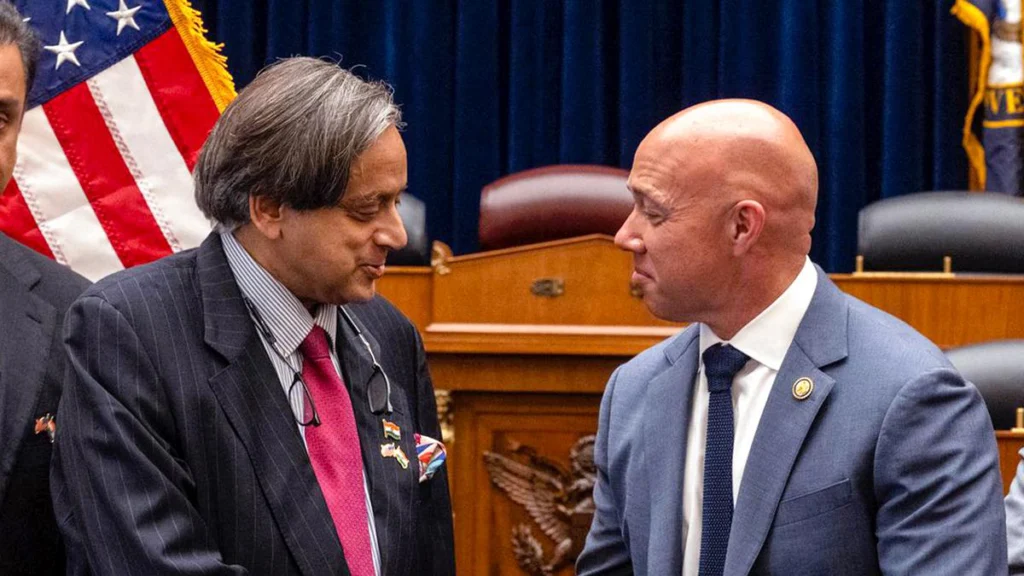
The U.S. House Foreign Affairs Committee has called for the designation of The Resistance Front (TRF) as a foreign terrorist organization (FTO). This move is part of a broader U.S. strategy to combat groups that threaten international stability and security. TRF, known for its militant tactics, has become a significant concern for the U.S. government, which sees the group as destabilizing. Representative Brian Mast, who chairs the committee, stated that former President Donald Trump had been right to categorize TRF as a foreign terrorist organization. The committee echoed his sentiments, emphasizing the need for this designation to enhance U.S. security efforts.
What Is the Resistance Front (TRF)?
TRF, also known as The Resistance Front, is a militant group that operates primarily in conflict zones. It claims to fight against perceived oppression and foreign influence, presenting itself as a resistance movement. However, the group uses violent tactics, including attacks on military and civilian targets, to achieve its political goals. These actions have led to increasing concerns about the group’s destabilizing impact on regional and global security.
The TRF has gained notoriety for its ability to coordinate strikes and recruit fighters. Its involvement in terrorist activities aligns with the U.S. government’s definition of a foreign terrorist organization. The group’s propaganda and recruitment efforts have contributed to its spread, attracting both local and international sympathizers. As a result, the U.S. has taken a strong stance against the group and its actions.
Why the U.S. Wants TRF Designated as an FTO
The U.S. Foreign Affairs Committee advocates for designating TRF as an FTO for several reasons. First, TRF’s tactics involve violence against civilians, a clear characteristic of terrorist organizations. By targeting both military personnel and innocent civilians, TRF has been able to instill fear, destabilize regions, and achieve its political objectives. The U.S. argues that by designating TRF as an FTO, it can help limit the group’s ability to recruit, fundraise, and operate.
In addition, TRF’s alliances with other recognized militant groups have amplified its reach and operational capacity. The U.S. government believes that cutting off TRF’s financial and logistical support is essential for disrupting its network. Designating TRF as an FTO would trigger economic sanctions, travel bans, and other measures aimed at curbing the group’s influence and operations.
Political Implications of FTO Designation
The political consequences of designating TRF as a foreign terrorist organization are significant. Such a designation typically results in the imposition of sanctions and restrictions, both for the group and its members. These measures are designed to isolate the group and prevent it from accessing resources that could aid its operations. Countries that engage with FTO-designated groups risk facing diplomatic and economic repercussions.
However, the decision to label an organization as a terrorist group is not without controversy. Critics argue that such designations can further alienate and radicalize communities that may already view the group as a protector. These communities could potentially rally behind the group, exacerbating the very instability the designation aims to combat.
The designation also has diplomatic implications. Countries that support or have ties to TRF may push back against the FTO designation. This could strain relations and complicate efforts to achieve peace and stability in the region. While the U.S. has historically used such designations as tools for diplomatic pressure, these actions can have unintended consequences, such as exacerbating conflicts or prolonging violence.
The Role of the International Community
The U.S. is not acting alone in its efforts to counter groups like TRF. The international community plays a critical role in the fight against terrorism. Countries around the world, including members of the United Nations and NATO, have supported the U.S. in its efforts to designate and disrupt terrorist organizations. Collaboration between nations is essential in identifying and eliminating terrorist threats.
However, for the FTO designation to be effective, the international community must coordinate actions. Financial institutions, intelligence agencies, and law enforcement must work together to track and dismantle networks that support terrorist groups. The U.S. has consistently pushed for greater intelligence-sharing among allies and partners, and this designation is a part of that broader strategy to combat terrorism globally.
Challenges of Counterterrorism Efforts
Counterterrorism efforts face numerous challenges. The global landscape of terrorism is constantly evolving, with new groups emerging and existing ones shifting tactics. TRF, like many militant organizations, has adapted to the changing security environment by leveraging social media, propaganda, and covert financing methods. These tactics make it harder to track and neutralize such groups.
Additionally, the complex political and social conditions in regions affected by terrorism make it difficult to address the root causes of radicalization. Poverty, political repression, and social inequality often contribute to the rise of extremist movements. Without addressing these underlying issues, efforts to combat terrorism may only provide temporary solutions.
Another challenge in counterterrorism efforts is balancing security measures with the protection of civil liberties. As governments take action against terrorist groups, they must also ensure that their actions do not violate human rights or infringe on freedoms. This delicate balance requires careful consideration, as heavy-handed tactics can lead to resentment and further radicalization.
The U.S. Strategy in the Global Fight Against Terrorism
The U.S. has long played a leading role in the global fight against terrorism. Through a combination of military, diplomatic, and economic strategies, the U.S. has targeted and dismantled numerous terrorist organizations. Designating groups like TRF as foreign terrorist organizations is a key component of this strategy. By isolating these groups and cutting off their resources, the U.S. seeks to weaken their ability to operate.
Additionally, the U.S. works closely with international partners to build counterterrorism capabilities in vulnerable regions. This includes training local forces, providing intelligence support, and offering humanitarian aid to stabilize areas affected by terrorism. The U.S. recognizes that addressing terrorism requires a multifaceted approach that includes both military action and diplomatic efforts.
Conclusion
The U.S. House Foreign Affairs Committee’s call for the designation of TRF as a foreign terrorist organization is a significant step in the global fight against terrorism. TRF’s violent actions and its alliances with other militant groups pose a serious threat to regional and global security. The designation will allow for targeted sanctions and other measures to disrupt the group’s operations. However, it also raises important questions about the broader impact of such designations on international relations and the effectiveness of counterterrorism efforts.
The U.S. strategy to combat terrorism relies on a coordinated approach, involving diplomatic pressure, military action, and international collaboration. As the global landscape of terrorism continues to evolve, so too must the strategies to combat it. Designating TRF as an FTO is just one part of the larger effort to eliminate terrorist threats and promote stability around the world.