GitHub unveils new AI tool ‘Spark’ to build full-stack apps with simple prompts
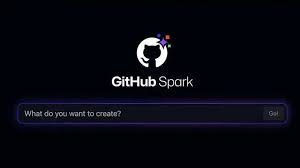
GitHub has unveiled Spark, an AI-driven development tool designed to transform how applications are built. With Spark, anyone—from seasoned developers to beginners—can create full-stack web apps simply by typing what they want. This innovative tool marks a significant evolution in AI-assisted software development, aiming to eliminate the barriers that traditionally slow down coding and deployment.
Turning Ideas into Applications
Spark operates on a simple principle: you describe the app you want, and the tool builds it. Instead of learning multiple programming languages or frameworks, users can provide a short prompt like, “Create a task manager with login, analytics, and notifications.” Spark takes this description and automatically generates the front-end, back-end, and database structure required for a working application.
The AI-driven platform doesn’t stop at basic scaffolding. It provides a live preview of the app, allowing users to tweak features or visuals in real time. This approach removes the need for complex local environments or lengthy setup procedures. As a result, both technical and non-technical users can go from concept to deployment in a matter of minutes.
AI Models Powering Spark
Under the hood, Spark is powered by Anthropic’s Claude Sonnet 4, a large language model known for advanced reasoning and high accuracy. GitHub also offers support for other AI models from providers such as OpenAI, Meta, DeepSeek, and xAI. Users can switch between these models without handling complicated API keys, making the entire experience seamless.
By combining natural language understanding with sophisticated code generation, Spark ensures that the applications it produces are not only functional but also follow best practices in terms of design and structure. This flexibility allows users to focus on creativity while the AI handles the technical details.
How Spark Works
Building an application with Spark involves four key steps:
- Describe Your App: Users start by writing a simple prompt describing the features they need.
- AI-Powered Generation: Spark generates the full-stack codebase, including UI components, backend APIs, and database schemas.
- Live Preview and Editing: The platform offers an instant preview of the application, allowing users to modify elements visually or through updated prompts.
- Deployment to GitHub: Once finalized, the application is automatically deployed to GitHub’s hosting infrastructure with a linked repository, CI/CD pipelines, and Dependabot security updates.
This end-to-end automation drastically shortens development cycles and simplifies the process of getting apps online.
Why Spark Is a Game-Changer
Spark represents a major step forward for no-code and low-code development. For entrepreneurs, small business owners, or creative professionals, the tool makes it possible to build functional prototypes or even production-ready apps without hiring a development team. Startups can test their ideas within hours rather than weeks, cutting costs and accelerating innovation.
For developers, Spark isn’t meant to replace coding but to enhance productivity. It provides a strong starting point that can be customized with manual code adjustments. By integrating with GitHub Copilot, Spark allows developers to seamlessly switch between AI-generated content and traditional coding practices.
Availability and Pricing
At present, Spark is available in public preview to GitHub Copilot Pro+ subscribers, priced at approximately $39 per month or $390 annually. The company plans to expand its reach gradually, adding new features and support for collaborative development as user feedback comes in.
This pricing model positions Spark as an attractive option for both professionals looking to speed up their workflow and non-technical users aiming to experiment with app ideas.
Key Features of Spark
- Full-Stack Generation: Builds complete apps, including the front-end, back-end, and database.
- Instant Deployment: Automatically deploys apps to GitHub hosting with CI/CD pipelines.
- Live Preview & Editing: Users can make changes on the fly without needing advanced technical skills.
- Multi-Model Support: Offers integration with AI models from leading providers like Anthropic and OpenAI.
- Shareable Projects: Apps, known as “sparks,” can be shared or remixed, promoting collaboration and open innovation.
Addressing Developer Concerns
While Spark simplifies app development, some experts caution against fully relying on AI-generated code. The concept of “vibe coding”—building solely through AI prompts—may lead to issues like performance bottlenecks, unnecessary complexity, or security gaps.
Developers are encouraged to treat Spark as a starting framework rather than a finished product. Reviewing, testing, and refining the code ensures that the final app meets professional standards.
Future of App Development
With Spark, GitHub is not just introducing another AI feature; it’s redefining the entire software creation process. The tool reflects GitHub’s broader mission to empower one billion people to build software, regardless of their technical expertise.
Looking ahead, Spark could become an essential part of the development ecosystem, much like GitHub itself revolutionized version control and collaboration. Whether used for rapid prototyping, internal tools, or even large-scale projects, Spark offers a glimpse of what the future of AI-powered coding looks like.