Mehboob urges Centre to take path of ‘dialogue and reconciliation’: ‘What’s India’s foreign policy without J&K’
SRINAGAR, July 28:
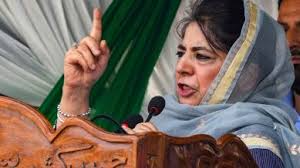
Peoples Democratic Party (PDP) leader and former Jammu and Kashmir Chief Minister Mehbooba Mufti called on the central government to embrace dialogue and reconciliation to resolve the Kashmir conflict. She questioned how India’s foreign policy can succeed without addressing Jammu and Kashmir’s issues.
At a public event in Anantnag, South Kashmir, Mufti said peace in the region depends on a clear political roadmap. “India cannot claim global leadership while ignoring Kashmir’s realities,” she stated.
“India’s Foreign Policy Must Include Kashmir”
Mufti’s remarks blended critique and appeal. “You speak of becoming a Vishwaguru (world leader), but how can foreign policy work if you ignore your own problems?” she asked. She insisted that India must engage meaningfully with Jammu and Kashmir to build credibility worldwide.
She added, “The world watches India closely, especially amid shifting global power dynamics. Resolving Kashmir is more urgent now than ever.”
Choose Reconciliation Over Suppression
Mufti criticized government actions after August 2019, when Article 370 was revoked and Jammu & Kashmir became a Union Territory. “The government cracked down on political leaders, civil rights, and the media,” she said.
She argued that these moves alienated Kashmiris instead of healing divisions. “Locking up leaders and silencing voices won’t win hearts,” she said. She called for open dialogue with all stakeholders, especially the youth who have endured curfews and conflict. “This generation needs hope, not more trauma.”
Invoking Vajpayee’s Legacy
Mufti recalled former Prime Minister Atal Bihari Vajpayee’s vision of solving Kashmir through “Insaniyat, Jamhooriyat, and Kashmiriyat” (Humanity, Democracy, and Kashmir’s unique culture).
“Vajpayee showed courage by engaging even with Pakistan. We need that courage again,” she said. She reminded that past talks led to progress like ceasefires and cross-border buses.
Message to Delhi and Islamabad
She urged India and Pakistan to act maturely. “If they can discuss trade and cricket, they can talk peace in Kashmir,” Mufti said.
She called on the Centre to resume diplomatic talks with Pakistan and avoid using Kashmir as a geopolitical pawn. “Kashmir should be a bridge, not a battleground.”
Addressing Youth and Unemployment
Mufti highlighted rising youth unemployment in Jammu and Kashmir. “Where are the promised jobs and investments?” she asked.
While the government promotes infrastructure projects, Mufti said, political neglect grows. “Development without dignity is hollow,” she said. “People fear speaking freely despite new roads.”
Demand to Restore Democracy
Mufti pushed for early assembly elections and restoring full statehood. “Democracy means choosing your leaders and having a voice. That right doesn’t exist in J&K today,” she said.
She warned that delaying statehood fuels alienation. “If democracy is India’s soul, why is it suspended in Kashmir?” she questioned.
Conclusion
Mehbooba Mufti’s call for dialogue and reconciliation comes at a crucial moment. Her question — “What’s India’s foreign policy without Kashmir?” — strikes a deep chord.
By urging a return to Vajpayee’s inclusive approach and renewed talks with Pakistan, she highlights an urgent need for political and social engagement. Whether the Centre listens remains unclear. But Kashmir continues to lie at the core of India’s identity and global standing.