India’s 1st private test facility for heavy water upgrade opens
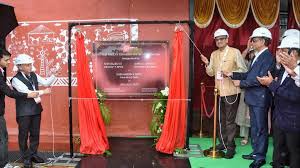
India has taken a bold step in its nuclear journey. A new private facility dedicated to testing heavy water equipment is now operational. TEMA India Ltd., an engineering firm based in Mumbai, opened this facility in Achchad village, Palghar, Maharashtra. This launch is a major breakthrough for India’s nuclear self-reliance initiative.
What Is Heavy Water and Why It Matters
Heavy water (D₂O) is essential in India’s Pressurized Heavy Water Reactors (PHWRs). Unlike regular water, heavy water contains deuterium. This element helps slow down neutrons during a nuclear reaction. As a result, the reactor runs more safely and efficiently.
However, heavy water becomes impure after some use. It must be upgraded to 99.9% purity before reuse. This upgrade process relies on complex equipment. Until now, only BARC (Bhabha Atomic Research Centre) handled such testing.
TEMA India’s New Role in Nuclear Progress
That dynamic has now changed. On July 26, 2025, TEMA India inaugurated the first private-sector facility for testing heavy water upgradation equipment. Built using technology from BARC, this center is a key collaboration with NPCIL (Nuclear Power Corporation of India Ltd.).
The facility tests components like distillation columns and upgrade modules. These are vital for heavy water recycling in PHWRs. Most importantly, this private setup helps ease the load on BARC.
Faster Equipment Deployment
One major benefit of this new center is time-saving. In the past, testing took nearly 7–8 years, often delaying reactor operations. Now, with this private facility, the timeline shortens by 1–2 years.
The first batch of validated equipment already went to RAPP-8 (Rawatbhata Atomic Power Plant Unit 8) in Rajasthan. That reactor is scheduled to go critical by December 2025. This quick turnaround shows how the private sector can speed up nuclear expansion.
Supporting Atma-Nirbhar Bharat
This facility strongly supports Atma-Nirbhar Bharat, India’s push for self-reliance. It shows that high-tech work once limited to state-run agencies can now be managed by Indian industry. This shift also promotes innovation and enhances manufacturing capability.
Moreover, public-private collaboration strengthens India’s position in the global nuclear arena. It builds trust between research bodies and industry players. With clear roles and shared goals, progress becomes faster and more efficient.
Looking Beyond Rajasthan
This facility isn’t just for RAPP-8. India has major nuclear expansion plans. The country aims to reach 22.4 GW of nuclear capacity by 2032 and 100 GW by 2047.
Many upcoming PHWRs will need upgraded heavy water systems. These include units at Kaiga (Karnataka) and Gorakhpur (Haryana). TEMA’s facility can serve all of them, reducing delays and improving rollout timelines.
A Model for Public–Private Synergy
This project sets a new benchmark in India’s nuclear sector. BARC provided the technology. NPCIL placed the order. TEMA handled the engineering. This smooth coordination can inspire similar partnerships across the energy sector.
If India applies this model in other critical areas—like nuclear fuel, safety systems, or waste management—its nuclear program will grow faster and stronger.
Global Implications
Globally, few private firms handle such sensitive nuclear work. With this new facility, India becomes one of the rare nations blending private innovation with nuclear policy.
This could open new doors for exports. Indian companies may soon provide tested components to other nuclear-ready countries. It also boosts India’s reputation as a serious player in clean, advanced energy.
Conclusion: A Quiet but Powerful Shift
The opening of this facility marks more than just an engineering achievement. It reflects a deep transformation in how India handles its nuclear growth. The move from a government-only approach to a private-public collaboration signals maturity, confidence, and readiness.
As India works to meet growing energy demands, nuclear power will play a central role. With the help of industry leaders like TEMA India, that future is not just possible—it’s within reach.