Trump to announce semiconductor tariffs next week, denies tariff rollback on electronic items
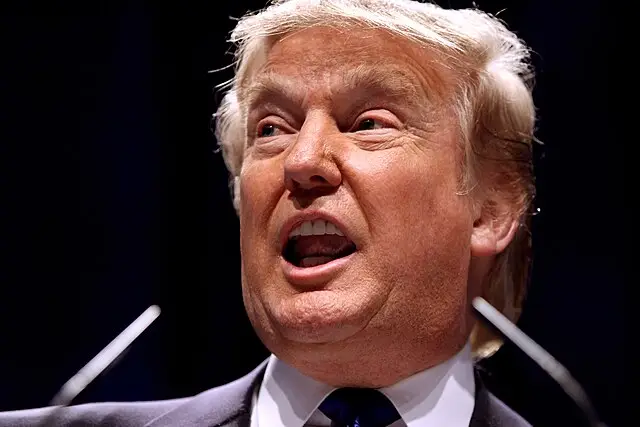
Trump Targets Semiconductors With New Tariffs, Warns of Future Electronic Item Duties
Former U.S. President Donald Trump has announced that new tariffs on imported semiconductor chips will begin next week. He clarified that the current exemption on electronic devices such as smartphones and laptops is temporary. Trump warned that these goods will soon fall under new tariff categories as part of a larger trade probe focused on national security.
In a post on his social media platform Truth Social, Trump wrote, “We are taking a look at Semiconductors and the WHOLE ELECTRONICS SUPPLY CHAIN in the upcoming National Security Tariff Investigations.” This statement confirms the administration’s plan to review the entire electronics industry with a sharp focus on global supply chains.
Electronics Exempt—for Now
Trump stressed that the exclusion of electronics is only short-lived. “Those electronic items are moving to different tariff buckets,” he said. This implies that smartphones, computers, and other similar devices will soon face tariffs under a revised structure.
Insiders say this strategy aims to give U.S. businesses time to adjust supply lines. However, the end goal remains clear—shift manufacturing away from China and reduce dependency on foreign tech products.
Global Markets React to Temporary Relief
Following the announcement of temporary relief for electronics, tech markets in Asia saw a noticeable uptick. Japan, South Korea, and Australia all reported gains in their tech sectors.
Taiwanese tech firms and stock exchanges in Hong Kong and mainland China also surged. Investors viewed the exclusion of electronic goods as a temporary break from the trade tensions.
Analysts, however, urged caution. “Markets are celebrating for now, but the celebration might not last,” said Rajiv Banerjee, a Singapore-based trade analyst. “Once tariffs hit electronics, we could see a sharp pullback.”
U.S. Commerce Secretary Confirms Timeline
Commerce Secretary Howard Lutnick confirmed that the tariffs on semiconductors will take effect soon. During an interview with ABC News, he said the current exemptions do not mean long-term safety for electronics.
“He’s saying they’re exempt from the reciprocal tariffs, but they’re included in the semiconductor tariffs, which are coming in probably a month or two,” Lutnick explained. This confirms that even consumer-focused tech products will likely face duties in the near future.
The administration is rolling out the tariffs in phases, giving U.S. industries time to prepare for price increases and supply changes.
China Responds with Counter-Tariffs
China wasted no time in reacting to the U.S. trade measures. On Friday, Beijing increased tariffs on American imports to 125%, responding to Trump’s earlier move to raise tariffs to 145%.
In a statement, China’s Commerce Ministry said, “The bell on a tiger’s neck can only be untied by the person who tied it.” This poetic line signals Beijing’s firm stance that the U.S. must make the first move to de-escalate.
Trade tensions between the two countries are heating up again, especially around high-tech industries and supply chains.
Strategic or Political?
Trump’s team continues to frame these actions as national security efforts. Yet critics argue the tariffs serve both strategic and political goals. By focusing on semiconductors and electronics, Trump is targeting industries central to modern life and global trade.
Allison Greer, a senior policy analyst at the American Trade Council, said, “There’s no doubt national security is a factor. But this is also about leverage. Chips power everything from phones to fighter jets. Whoever controls them holds the upper hand.”
Trump’s tough stance could also energize voters ahead of the 2024 election. His message of bringing back American jobs and taking a strong line against China still resonates with many.
A Push for U.S. Tech Independence
The pandemic exposed major flaws in global tech supply chains. Delays in chip shipments disrupted car production, smartphone launches, and even gaming consoles. Trump’s latest move signals a stronger push to make the U.S. more self-reliant.
Still, experts believe tariffs alone won’t solve the problem. The country also needs large investments in infrastructure, skilled labor, and research to build a complete semiconductor ecosystem.
“Tariffs might slow imports, but they won’t build factories,” said a spokesperson from the Semiconductor Industry Association. “We need long-term planning, not just trade barriers.”
What’s Next?
The tariff on semiconductors is just the beginning. Trump’s administration plans to evaluate the entire electronics supply chain, starting from raw materials to finished devices.
While this may support American tech manufacturing in the long run, short-term effects could include rising prices and supply disruptions.
If Trump wins a second term, his trade strategy will likely focus on reshaping global tech dependence. His allies argue this is essential for national security. Critics warn that it may damage global trade ties and increase costs for consumers.
Conclusion
Trump’s new tariff on semiconductors marks a major shift in U.S. trade and tech policy. Though electronic goods are temporarily spared, they won’t remain untouched for long. As national security becomes a central issue in trade talks, the global tech supply chain faces fresh uncertainty. For now, the world watches and waits as the U.S. redraws its strategy in the semiconductor war.