From the Urdu Press: ‘Global outreach must expose Pak terror policy’, ‘Congress should not turn back on Tharoor’
From the Urdu Press: ‘Global Outreach Must Expose Pak Terror Policy’, ‘Congress Should Not Turn Back on Tharoor’
The recent terror attack in Pahalgam, which claimed 26 lives, has reignited concerns over Pakistan’s alleged support for terrorism. Consequently, political leaders and media outlets across India, including those in the Urdu press, have called for a firm, united, and strategic response. Two key themes have emerged: the need for international outreach to isolate Pakistan diplomatically, and a call for national unity, especially in light of Congress MP Shashi Tharoor’s proactive stance.
Mounting Pressure on Pakistan
In response to the Pahalgam tragedy, the Urdu daily Salar published an editorial titled “Aar paar ki tayyari” (“Preparations for the decisive battle”), which detailed India’s multi-pronged diplomatic response. Notably, this includes suspension of the Indus Waters Treaty, withdrawal of Pakistani diplomatic staff, visa cancellations, and closure of the Attari-Wagah border.
Moreover, Salar sharply criticized Pakistan for continuing to deny its role in cross-border terrorism, while urging the Indian government to expose Islamabad’s duplicity on international forums. Similarly, The New Indian Express underscored that mere condemnation is not enough. Instead, India must intensify efforts to diplomatically isolate Pakistan by leveraging global partnerships, particularly with nations like Saudi Arabia.
Furthermore, the editorial emphasized the need to challenge China’s resistance to designating Pakistani terrorists under the United Nations Security Council (UNSC) sanctions regime. In short, dismantling Pakistan’s terror infrastructure requires more than rhetoric—it calls for sustained global pressure.
Shashi Tharoor’s Call for Strategic Unity
At the domestic level, Congress MP Shashi Tharoor emerged as a strong voice advocating for a measured yet decisive response. Speaking shortly after the attack, he dismissed Pakistani Prime Minister Shehbaz Sharif’s demand for a neutral investigation, stating, “You do not ask a murderer to investigate his own murders.”
Additionally, Tharoor emphasized that political unity must supersede party divisions during such critical times. He urged political parties not to indulge in blame games, arguing that such actions only serve to weaken India’s global standing.
According to Tharoor, defeating Islamist terrorism and their handlers in Pakistan requires both military and diplomatic action. Notably, he has proposed calibrated military responses, including airstrikes on terror camps and targeting Pakistani merchant shipping. This, he believes, would send a clear message to Rawalpindi, the power center of Pakistan’s military establishment.
Diplomatic Outreach: A Key Front
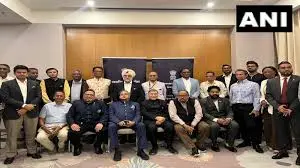
Meanwhile, Tharoor has also played a pivotal role in diplomatic outreach following the attack. Leading India’s delegation to engage key global partners, he has pushed for Pakistan’s international isolation. His efforts include demands for the extradition of wanted terrorists, renewed FATF scrutiny of Islamabad, and fresh UNSC listings of terrorist leaders.
Interestingly, a closed-door UNSC meeting requested by Pakistan ended without any resolution or statement, largely due to probing questions from member states about Pakistan’s links to terror groups like Lashkar-e-Taiba. This diplomatic setback for Pakistan was interpreted by many as a small but important victory for Indian diplomacy.
Moreover, Tharoor stressed the importance of cyber operations and covert measures to disrupt terrorist networks. Thus, he advocates for a comprehensive counter-terror strategy that spans military, diplomatic, technological, and intelligence dimensions.
The Political Undercurrents
On the domestic political front, controversy erupted after the Bharatiya Janata Party (BJP) released a video attacking the Congress-led UPA government’s past handling of terrorism. Tharoor criticized the move as petty and divisive, especially at a time when national unity is paramount.
He urged the BJP to delete the video, emphasizing that internal divisions only benefit those who seek to destabilize India. As a result, many observers noted that Tharoor’s stance appealed not only to his party but also to a broader national sentiment.
Despite internal disagreements within Congress, Tharoor’s leadership has been recognized. His appointment to lead India’s delegation for critical international talks reflects his expertise and cross-party appeal.
Conclusion: A Call for Cohesion and Clarity
In conclusion, the Pahalgam terror attack has laid bare the continuing challenge of cross-border terrorism. The Urdu press has echoed national sentiment, calling for a robust diplomatic and strategic offensive against Pakistan. At the same time, leaders like Shashi Tharoor have underscored the importance of unity, both within political circles and across civil society.
Therefore, India’s path forward must combine global outreach, decisive action, and internal cohesion. Only through a well-coordinated effort can the nation hope to dismantle the networks of terror and secure lasting peace.