Scientists detect 13 billion-year old signal from ‘Cosmic Dawn’ using Earth-based telescopes
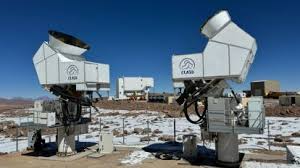
Scientists have made a groundbreaking discovery by detecting a signal from nearly 13 billion years ago. This signal, known as the “Cosmic Dawn” signal, reveals an early period when the first stars and galaxies began to form. Using advanced radio telescopes on Earth, researchers captured faint radio waves from this ancient time. This discovery helps us understand the universe’s beginnings and how it evolved.
What Is the Cosmic Dawn?
About 13.8 billion years ago, the universe began with the Big Bang. After this event, the universe went through a period called the “Dark Ages.” During this time, mostly neutral hydrogen gas filled space. No stars or galaxies had formed yet, so the universe remained dark.
The Cosmic Dawn marks the end of this dark period. It occurred roughly 180 million years after the Big Bang. During this time, the first stars started to shine. These stars emitted ultraviolet light that began to ionize the hydrogen gas around them. This process, called reionization, eventually transformed the universe into the bright cosmos we know today.
Detecting signals from the Cosmic Dawn is very hard. The radiation emitted back then has stretched over billions of years and weakened. It now appears at radio frequencies that are faint and can easily be drowned out by interference. Scientists have developed special telescopes and techniques to find these weak signals.
The EDGES Experiment and Its Discovery
One major effort to find the Cosmic Dawn signal was the EDGES project. EDGES stands for Experiment to Detect the Global Epoch of Reionization Signature. It is located in a remote part of Australia. The telescope was designed to find a specific radio signal from hydrogen atoms in the early universe.
In 2018, the EDGES team announced a major finding. They detected a dip in the radio signal at about 78 MHz. Scientists believe this dip came from hydrogen gas absorbing background radiation left over from the Big Bang. This suggested that the first stars had formed and started heating the gas around them.
The shape and strength of the signal surprised scientists. It was stronger than expected from current models. This hinted that new physics might be involved. Some researchers suggested possible interactions between dark matter and normal matter or other unknown effects.
Scientific Debate and Further Studies
After the EDGES announcement, scientists worked to confirm the findings. A notable study came from the SARAS project in India. Led by radio astronomer Ravi Subrahmanyan, SARAS used an instrument called SARAS 3. They placed it on a reservoir in Karnataka to measure the same frequency range.
Their results, published in 2022, did not match the strong signal from EDGES. Instead, they suggested the original EDGES signal might have come from instrument errors or interference. This sparked a lively debate among astronomers.
Radio signals at these frequencies are very sensitive to interference from human-made sources and Earth’s atmosphere. Both the EDGES and SARAS teams continue to refine their measurements. New experiments aim to clarify which results are correct.
Why This Discovery Is Important
Even with the debate, the search for the Cosmic Dawn signal marks a huge advance in cosmology. Until recently, most studies focused on light from stars and galaxies formed hundreds of millions of years after the Big Bang. The Cosmic Dawn signal gives us a direct look at an even earlier time.
Studying this period matters for several reasons:
- Understanding Star and Galaxy Formation: It shows when and how the first stars and galaxies formed.
- Exploring Dark Matter: The unexpected features in the signal might reveal how dark matter interacts with normal matter.
- Tracking Reionization: It helps us learn how the universe changed from neutral gas to ionized gas.
- Testing Cosmological Models: These observations help confirm or challenge our models of the universe’s history.
The Future of Cosmic Dawn Research
Scientists are excited about new tools that will improve our view of the Cosmic Dawn. The James Webb Space Telescope (JWST), launched in 2021, observes early galaxies in infrared light. Although JWST does not detect the hydrogen signal directly, it complements radio observations by showing the first galaxies.
Next-generation radio telescopes like the Square Kilometre Array (SKA) will greatly improve our ability to detect faint radio waves. SKA is under construction and promises to deliver clearer data than ever before.
Other projects such as HERA (Hydrogen Epoch of Reionization Array) and LOFAR (Low-Frequency Array) also study the reionization era. Together, these instruments will build a detailed timeline of how the universe evolved from darkness to light.
Conclusion
Detecting the 13-billion-year-old Cosmic Dawn signal is a remarkable achievement. It gives us a rare window into the universe’s earliest moments. While debates continue about the exact nature of the signal, this research pushes the limits of what we know about cosmic history.
As new technology comes online, scientists expect to learn much more about the first stars and galaxies. This work helps us understand not only where we came from but also the fundamental laws that govern the universe. The Cosmic Dawn study represents a bright new chapter in humanity’s journey to explore the cosmos.