AB de Villiers proposes World Cup-style 4-year cycle for WTC: ‘We’ve done that with ODIs, why not with Tests?’
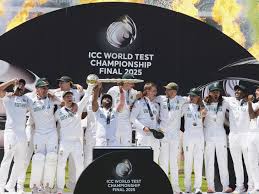
Former South African cricket star AB de Villiers has recently sparked conversations in the cricketing world by proposing a World Cup-style four-year cycle for the World Test Championship (WTC). His suggestion comes amid ongoing debates about how to boost the profile and commercial appeal of Test cricket — the longest and arguably the most traditional format of the sport.
The Current State of the World Test Championship
Since its inception in 2019, the World Test Championship has aimed to add more context and excitement to bilateral Test series played between international cricket teams. Instead of isolated series with little continuity, the WTC brings a points-based competition over a set period, culminating in a final to crown the world’s best Test team.
However, the current WTC format runs on a two-year cycle, which some critics argue is too short and fails to build sustained interest among fans and broadcasters. Unlike the limited-overs formats, which enjoy global tournaments like the ICC Cricket World Cup (50 overs) and ICC T20 World Cup (20 overs), Test cricket lacks a marquee event on the scale of a quadrennial tournament that could capture the imagination of a wider audience.
De Villiers’ Vision: Why a Four-Year Cycle?
AB de Villiers, known for his innovative thinking both on and off the field, recently suggested that the WTC should adopt a four-year cycle similar to the World Cup. His reasoning is straightforward: “We’ve done that with ODIs, why not with Tests?”
The four-year cycle has been instrumental in elevating the limited-overs World Cup tournaments into massive global sporting spectacles. Fans eagerly anticipate these tournaments as the pinnacle of the format, and players gear up to peak for these quadrennial events. De Villiers believes that adopting a similar structure for Test cricket can do the same — build anticipation, increase viewership, and create a more marketable product.
Benefits of a Four-Year Cycle for Test Cricket
1. Building Anticipation and Narrative
A longer cycle means each series and match within the WTC gains more significance. The storylines will develop over years rather than months, allowing rivalries to deepen and narratives to flourish. The current two-year window sometimes feels rushed, with frequent interruptions due to other formats and international tours.
2. Commercial Appeal and Sponsorship
Broadcasters and sponsors crave stability and marquee events to anchor their investments. A four-year cycle culminating in a grand final event could help Test cricket secure bigger sponsorship deals and improved broadcast rights. The limited-overs World Cups command huge global audiences and significant revenue, something Test cricket has struggled to consistently achieve.
3. Player Preparation and Focus
A longer cycle could also mean better scheduling and preparation. Players and boards could prioritize WTC matches with a clear long-term goal, improving the quality and competitiveness of the games. The current format sometimes sees Test series squeezed in between hectic schedules, affecting player performances.
Challenges and Considerations
While the idea has merit, it is not without challenges. Test cricket operates on a complex international calendar where multiple formats coexist. Balancing a four-year WTC cycle alongside ODIs and T20s — each with their own tournaments and leagues — requires careful planning.
Additionally, some cricket boards may resist changes that reduce the frequency of WTC finals or reduce the number of meaningful Test matches in the shorter term. The financial implications for boards that rely heavily on bilateral Test revenues cannot be ignored.
The ICC’s Role and Possible Future
The International Cricket Council (ICC), the global governing body for cricket, continuously reviews the format and scheduling of its tournaments. The WTC was a significant step in revitalizing Test cricket, and tweaks like the one proposed by AB de Villiers could be considered to further enhance the format.
The ICC could explore extending the WTC cycle to four years, aligning it with the ODI World Cup, or even spacing out Test matches more strategically to maintain quality and viewership.
Lessons from ODI and T20 Cricket
Limited-overs cricket has transformed the sport globally, attracting new audiences with fast-paced, high-energy formats. The quadrennial World Cups in both ODI and T20 formats are among the biggest sporting events worldwide. Their success lies in their clear structure, build-up, and the prestige of winning a world championship.
De Villiers’ suggestion encourages Test cricket administrators to borrow from these successful models to boost Test cricket’s profile without compromising its essence. The challenge is to retain the rich traditions of Test cricket while making it more accessible and appealing in today’s crowded sporting landscape.
Conclusion: A Bold Step Towards Test Cricket’s Future?
AB de Villiers’ proposal to adopt a World Cup-style four-year cycle for the World Test Championship is a thought-provoking idea that could reshape how Test cricket is perceived globally. While there are practical hurdles to overcome, the concept aims to build a more sustained and engaging narrative for the sport’s oldest format.
If implemented, this change could strengthen the global appeal of Test cricket, giving fans a marquee event to look forward to every four years while preserving the integrity and prestige of the longest format. As cricket continues to evolve, ideas like these are essential to ensure Test cricket not only survives but thrives in the modern era.