Israel outlines plans to pack Gaza’s population into closed border zone, says report
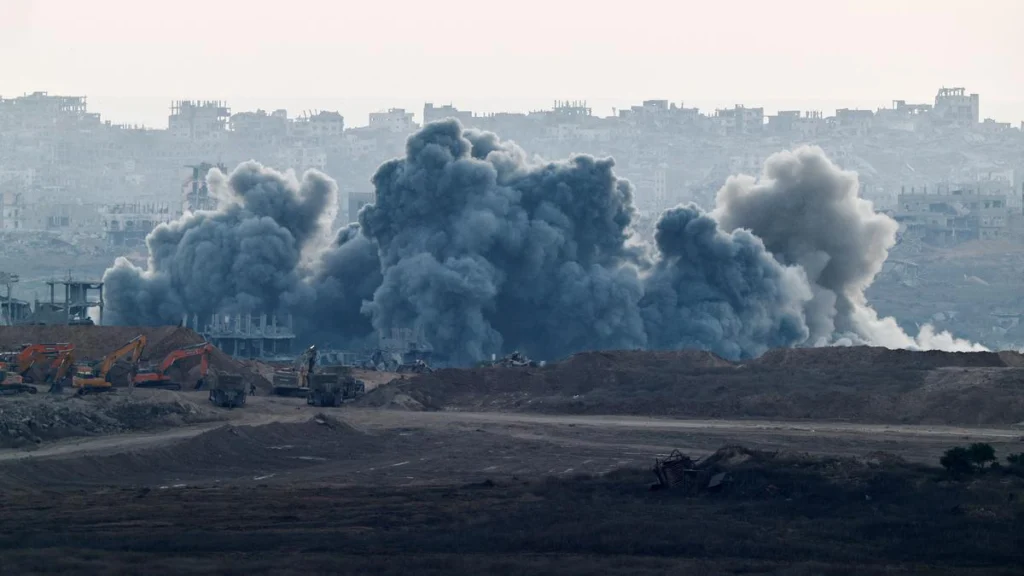
Israel’s latest proposal to relocate Gaza’s population into a closed border zone has generated global outrage. Critics argue this plan constitutes forcible displacement, violating international law. Israel’s military actions and blockade have already made Gaza largely uninhabitable, and this new plan could further exacerbate the humanitarian crisis.
Gaza’s Dire Situation
Gaza has been under siege for years. Israel’s blockade restricts the movement of people, goods, and essential services, worsening the living conditions for its two million residents. Over the years, Israel has carried out numerous military operations that have destroyed Gaza’s infrastructure, including homes, schools, hospitals, and water plants. As a result, basic services like healthcare, electricity, and clean water are scarce. Gaza’s healthcare system is overwhelmed, and hospitals struggle to provide care for the injured.
This prolonged blockade and repeated military offensives have left Gaza in a state of constant crisis. International organizations, including the United Nations, have repeatedly called for the lifting of the blockade to allow humanitarian aid to reach those in need. Yet, the situation remains unchanged, and Gaza’s residents continue to suffer.
Israel’s Proposal for a Closed Zone
Israel’s proposed plan aims to relocate a significant portion of Gaza’s population into a tightly controlled area along the Israeli border. Officials argue that this will help improve security by reducing the risk of Hamas fighters blending in with civilians. The plan suggests consolidating Gaza’s population into a smaller, more monitored space.
Critics, however, believe this action would amount to forced displacement. Relocating families from their homes and confining them to a crowded zone would only deepen the existing humanitarian crisis. Gaza’s residents would face even harsher conditions, including limited access to essential services like healthcare, food, and clean water. Such a move would also strip Palestinians of their right to live freely within their own land.
Violation of International Law
Forcibly displacing civilian populations is prohibited under international law, specifically the Fourth Geneva Convention. This law protects civilians from being displaced from their homes and ensures that occupying powers do not forcibly move people for political or military purposes. By relocating Gaza’s population into a closed zone, Israel would violate these international protections.
Human rights organizations argue that Israel’s proposal amounts to ethnic cleansing, a deliberate attempt to strip Palestinians of their homes and livelihoods. The international community has long condemned Israel’s policies regarding the Palestinians, and this plan would only escalate those concerns.
The Impact of Israel’s Blockade and Offensive
Gaza’s situation has worsened due to Israel’s military actions and the blockade. Repeated airstrikes have decimated Gaza’s infrastructure, leaving families without homes and basic resources. The healthcare system is overwhelmed, and diseases are spreading due to the lack of clean water and sanitation. The ongoing violence and instability have also left psychological scars on the population, especially children, who have grown up in a war-torn environment.
The lack of movement and essential supplies has made Gaza almost uninhabitable. Any attempt to relocate the population into a more confined area will only increase the suffering. The already overcrowded conditions would likely worsen, leading to further human rights violations and a deeper humanitarian crisis.
The Critics’ Concerns
Experts and human rights groups have expressed deep concerns about the proposed relocation. The move would further isolate Gaza’s residents, trapping them in an even more controlled and restricted area. Such action could lead to mass casualties, especially if the move is conducted forcefully or without proper resources for the displaced population.
These critics argue that the proposal is not a solution to the problem but an exacerbation of the issue. Moving Gaza’s population into a closed zone will not address the root causes of the conflict. It will only entrench Israel’s control over Palestinian territories and strip people of their right to live in their homes.
The International Community’s Role
The international community must act to prevent Israel from implementing this plan. Governments and human rights organizations need to apply pressure on Israel to respect international law and stop the displacement of Gaza’s population. There must be a global call for Israel to halt its blockade and military actions, which have already devastated the region.
The United Nations has repeatedly called for the protection of Palestinians and their right to live in peace. However, Israel has largely ignored these calls. Stronger international intervention may be necessary to hold Israel accountable for its actions and prevent further violations of human rights.
The Future of Gaza
The people of Gaza have faced decades of hardship. The international community must continue to advocate for the rights of Palestinians and pressure Israel to end its occupation of Palestinian territories. The current situation is unsustainable, and the forced relocation of Gaza’s population would only deepen the divide between Israelis and Palestinians.
A lasting peace in the region will only come when both sides address the root causes of the conflict. Palestinians deserve the right to live freely in their own land, and Israel must recognize their sovereignty and work towards peaceful coexistence.
Conclusion: A Call for Action
Israel’s proposal to relocate Gaza’s population into a closed zone is a dangerous and unjust action. It violates international law, exacerbates the humanitarian crisis, and further isolates the Palestinian people. The international community must take immediate steps to prevent this plan from moving forward and ensure that Gaza’s residents are allowed to live with dignity and freedom.
The world must not allow forced displacement to become the solution to the Israeli-Palestinian conflict. True peace can only come when both sides work towards mutual understanding, respect for human rights, and the recognition of each other’s sovereignty. Until then, the people of Gaza will continue to suffer, and the possibility of a peaceful resolution will remain elusive.