How PSG’s brand of champagne football blew Real Madrid away 4-0 at the Club World Cup semifinal
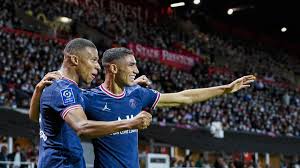
Paris Saint-Germain produced a footballing masterclass to dismantle Spanish giants Real Madrid 4-0 in the Club World Cup semifinal, delivering a breathtaking performance that will be remembered as one of the most dominant displays on a global stage. The match wasn’t just a semifinal—it was a showcase of tactical brilliance, creative freedom, and attacking artistry, all wrapped in PSG’s signature “champagne football” style.
A Statement of Intent From the Start
From the very first minute, PSG looked like a team with a mission. They pressed with intensity, passed with precision, and showed no signs of hesitation. The midfield trio of Vitinha, Warren Zaïre-Emery, and Marco Asensio controlled the tempo brilliantly, keeping Madrid on the back foot. Within the first 10 minutes, the signs of a one-sided affair began to emerge.
The breakthrough came early. A swift move from the left saw Nuno Mendes burst forward and deliver a low cross that found Vitinha, who struck a thunderous shot from just outside the box. Thibaut Courtois was left grasping at air as the ball rocketed into the top corner. 1-0 to PSG—and the floodgates were just opening.
The Essence of Champagne Football
Champagne football is more than just flair—it’s football that combines elegance, creativity, and control, with an emphasis on joy and entertainment. PSG, under Luis Enrique’s evolving leadership, finally seem to have found the right balance between their individual brilliance and collective structure. Against Real Madrid, it was on full display.
Kylian Mbappé, the poster boy of PSG’s project, showed why he’s considered one of the best players in the world. Constantly threatening with his pace and movement, he tormented Dani Carvajal throughout the match. His goal in the 26th minute—a solo run finished with a calm chip over Courtois—was a perfect representation of confidence and class.
What stood out wasn’t just the goals, but how PSG moved as a unit. One-touch passes, overlapping runs, and intelligent spacing made them unplayable at times. Real Madrid, known for their composure and experience in knockout ties, simply couldn’t cope.
Real Madrid’s Uncharacteristic Collapse
It’s rare to see Real Madrid look this lost on a big stage. Their midfield was overrun, their defense was stretched, and their attack was largely anonymous. Without the injured Antonio Rüdiger, the Madrid backline looked shaky. Éder Militão and Nacho Fernandez struggled to deal with PSG’s movement, especially when Asensio drifted between the lines.
Toni Kroos and Luka Modrić, usually the calming presence in Madrid’s midfield, were a step behind the game. PSG’s quick transitions and relentless pressing made it impossible for Madrid to build from the back. Even Jude Bellingham, the breakout star of Madrid’s season, had a quiet game as he was tightly marked and denied space.
By halftime, the scoreline read 3-0 after Ousmane Dembélé curled in a beautiful left-footed shot from the edge of the area, following a dazzling solo run down the right wing. The PSG bench erupted, and the Madrid players looked shell-shocked.
Luis Enrique’s Tactical Brilliance
Much credit must go to PSG’s manager Luis Enrique. His tactical setup was near flawless. The team was compact in defense but expansive in attack, always looking to exploit Madrid’s high line with well-timed runs and incisive passes.
He deployed a fluid 4-3-3 that morphed into a 3-4-3 during buildup, allowing full-backs like Hakimi and Mendes to push forward while Zaïre-Emery tucked in centrally. This not only created numerical superiority in midfield but also stretched Madrid wide, leaving them vulnerable through the center.
Enrique’s system allowed PSG to dictate play at will. Every time Madrid tried to press, PSG bypassed it with crisp passing and positional intelligence. It was a mature, well-drilled performance that contrasted with PSG’s often chaotic outings in past big games.
Mbappé’s Audition—Or Warning?
Kylian Mbappé’s performance was particularly poetic. With Real Madrid long rumored to be his next destination, the French forward chose the perfect occasion to shine. Not only did he score and assist, but his overall dominance sent a message: whether he joins Madrid or not, he’s already a level above.
His link-up play with Dembélé and Asensio was electric. He dropped deep when needed, pulled defenders out of position, and played with the swagger of a man fully in command of his destiny. For Madrid fans watching, it was perhaps a taste of what could be—or what they might continue to miss.
The Road to Glory
With this emphatic victory, PSG march into the Club World Cup final with supreme confidence. They are set to face [insert opponent if known], and on current form, it’s hard to see any side stopping them. More importantly, this performance silences the narrative that PSG can’t deliver on the big stage.
For years, critics have labeled them as a team of individuals, lacking cohesion. This semifinal was the clearest sign yet that those days are behind them. With a coach who has instilled a clear philosophy and a squad that seems to enjoy playing together, PSG look ready to conquer more than just French football.
Conclusion
PSG’s 4-0 win over Real Madrid was not just a semifinal triumph—it was a declaration. A declaration that they are no longer just contenders but genuine champions in waiting. With champagne football flowing and the team finally clicking, the dream of global dominance may no longer be just that—a dream.
If this performance is any indication, PSG may have found the recipe for greatness. And it’s as sparkling as champagne.