As NEP issue stalls Parliament, some unease in BJP over ‘playing into DMK hands’
BJP and DMK Clash Over NEP in Parliament
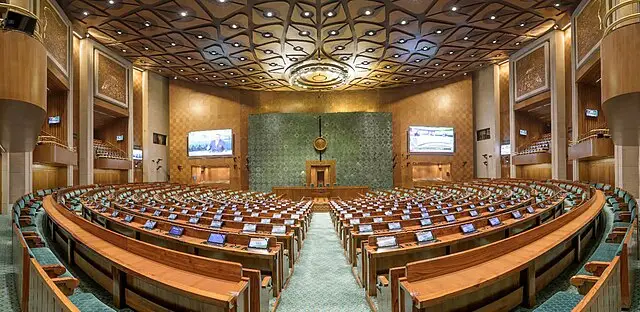
The ongoing battle between the BJP and DMK over the National Education Policy (NEP) reached Parliament on Monday, leading to a major disruption in the Lok Sabha. The argument started when Union Education Minister Dharmendra Pradhan accused the DMK-led Tamil Nadu government of misleading students about NEP. His statement triggered loud protests from DMK MPs, who demanded its withdrawal. As a result, the Speaker had to intervene, and Pradhan was forced to retract his remarks.
This latest conflict has once again brought the NEP debate into the spotlight, particularly in Tamil Nadu, where the DMK government has strongly opposed the policy since its introduction by the BJP-led central government.
BJP’s Accusation: DMK is Misleading Students
The BJP-DMK fight over NEP intensified when Dharmendra Pradhan claimed that the Tamil Nadu government is misrepresenting the policy for political gains. He argued that NEP is a progressive step toward improving education across India, but the DMK is unnecessarily creating controversy.
During the Question Hour in Lok Sabha, Pradhan directly blamed DMK leaders for spreading misinformation about PM-SHRI schools (Prime Minister Schools for Rising India). He accused the Tamil Nadu government of initially supporting these schools but later making a U-turn for political reasons.
His remarks angered DMK MPs, who strongly objected and protested inside the Parliament. The situation became so tense that Speaker Om Birla had to step in to control the chaos. Eventually, Pradhan withdrew his statement, but the political tension between BJP and DMK over NEP continues to grow.
Tamil Nadu CM Stalin’s Strong Response
The BJP and DMK clash over NEP took another turn when Tamil Nadu Chief Minister M.K. Stalin responded strongly to Pradhan’s remarks. Taking to social media, Stalin criticized the Union Minister for disrespecting Tamil Nadu’s stance on education.
He tweeted:
“The Union Minister should respect Tamil Nadu and stop playing politics. Does Prime Minister Narendra Modi approve of this arrogance?”
This sharply worded tweet from Stalin further fueled the political debate. Many opposition leaders supported Stalin’s statement, arguing that BJP is trying to impose its policies on states without considering their concerns.
Why DMK is Opposing NEP
The DMK government has been one of the strongest critics of NEP since it was introduced by the BJP-led central government in 2020. According to DMK, NEP is not suitable for Tamil Nadu due to several key reasons:
1. Threat to Tamil Language
One of the biggest concerns of the DMK government is that NEP promotes Hindi and Sanskrit, reducing the importance of regional languages like Tamil. Tamil Nadu has historically opposed the imposition of Hindi, and DMK believes NEP is another attempt to weaken Tamil’s role in education.
2. Shift of Control from State to Centre
Under NEP, the central government would have more power in deciding education policies, while state governments would have less control. DMK argues that education is a state subject, and Tamil Nadu should have the right to frame its own policies.
3. NEP and Hindutva Influence
Many DMK leaders claim that NEP is part of BJP’s larger agenda to promote Hindutva ideology. They argue that certain NEP recommendations favor religious teachings linked to Hinduism, which goes against Tamil Nadu’s secular approach to education.
4. Three-Language Policy
NEP recommends a three-language formula, which means students would have to learn Hindi, English, and a regional language. Tamil Nadu follows a two-language policy (Tamil and English) and has opposed making Hindi mandatory.
5. Impact on Rural Students
DMK leaders argue that NEP favors privatization of education, making quality education less accessible to rural and underprivileged students. Many students in Tamil Nadu come from government schools, and DMK believes NEP will widen the gap between rich and poor students.
BJP Defends NEP: Why They Support It
While DMK opposes NEP, the BJP strongly defends it, stating that the policy will transform the Indian education system for the better. According to BJP leaders, NEP will:
- Introduce modern teaching methods
- Reduce the burden of rote learning
- Give students more flexibility in choosing subjects
- Improve vocational and skill-based education
- Make Indian students more competitive at a global level
BJP leaders argue that Tamil Nadu should give NEP a chance, instead of rejecting it for political reasons.
Growing Political Tensions Over NEP
The BJP and DMK dispute over NEP is not just about education—it has become a larger political battle. Tamil Nadu has always been a stronghold of Dravidian parties like DMK and AIADMK, and BJP has struggled to make significant political gains in the state.
Many political analysts believe that BJP is using NEP to strengthen its presence in Tamil Nadu, while DMK is using NEP to rally its voter base against the BJP. With state and national elections approaching, this debate is expected to become even more intense.
What Lies Ahead?
As the BJP-DMK conflict over NEP continues, education experts and students remain caught in the middle. While BJP insists that NEP is the future of Indian education, DMK argues that it is not suitable for Tamil Nadu.
In the coming months, the Tamil Nadu government might introduce alternative policies to counter NEP. Meanwhile, BJP is expected to continue pushing for NEP implementation nationwide, including in states that oppose it.
For now, the NEP controversy remains a hot topic in Indian politics, with both BJP and DMK refusing to back down. The question remains: Will Tamil Nadu accept NEP, or will it continue to resist?