‘ChatGPT Barbie is a threat’: Experts warn against AI doll trend, raise climate concerns
Experts Warn: Barbie Trend Using AI Could Harm Privacy, Culture, and the Environment
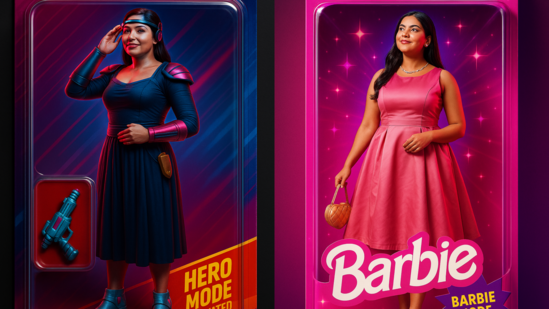
The Barbie trend powered by AI tools like ChatGPT has quickly gained popularity as people create miniature versions of themselves, resembling Barbie dolls and action figures. By uploading their photos, users can transform their images into customized, doll-like versions, complete with names, jobs, and clothing choices. This ability to personalize the avatars is part of the trend’s charm, offering a unique and shareable representation of oneself. However, experts are urging caution, warning that the seemingly harmless trend could have significant consequences for privacy, culture, and the environment.
The Rise of AI Personalization
The Barbie trend allows people to personalize digital versions of themselves, making it easier to create unique avatars. By uploading their photos, users can transform themselves into miniature “Barbie-like” figures, adding details like their names, professions, and even clothing preferences. The simplicity and accessibility of these AI tools make it easy for anyone to engage in this creative experience, regardless of their technical expertise.
For many, the allure of this trend lies in the ability to customize an avatar that feels truly unique. The personalized doll can then be shared on social media, with the user feeling a stronger connection to the character. The personalization process has become a form of self-expression, where users can create and celebrate their digital selves in a playful way.
However, as the trend grows in popularity, experts are raising concerns about the broader implications of AI tools like ChatGPT. While these tools offer exciting possibilities for creativity, they also present risks that users may not fully consider.
Privacy Concerns
The Barbie trend raises significant privacy concerns, as it involves uploading personal photos and information to AI-powered platforms. To create personalized avatars, users must provide sensitive data, which these tools process to generate the desired output. This data collection could lead to privacy breaches, as AI tools often require large datasets to improve their algorithms.
Many users may not fully understand the privacy risks involved when sharing personal information with AI tools. Once uploaded, the data may be stored, processed, or even sold by companies, often without the user’s explicit consent. This lack of transparency increases the potential for data misuse and exploitation. Experts urge users to be cautious about how much personal information they share with AI tools, as the data may end up being used for purposes that go beyond the initial customization of a Barbie-like avatar.
Cultural Impacts
The Barbie trend is not just about creating playful avatars; it also has cultural implications. Barbie has long been a cultural icon, associated with specific beauty standards, gender norms, and expectations. By turning themselves into miniature versions of Barbie, users engage with a brand that has historically embodied certain ideals.
While some may view this trend as a form of creative expression, others worry that it reinforces outdated stereotypes. Professor Gina Neff from Queen Mary University in London expressed concerns about how AI tools mix brands and characters without regard for their cultural significance. She stated that ChatGPT Barbie represents a “triple threat” to privacy, culture, and the planet, as it mixes brands and identities without responsibility for the consequences.
The rapid commercialization and automation of cultural icons like Barbie risk diluting their original meanings. Instead of celebrating the deeper, symbolic value of Barbie and other characters, the trend becomes about quick and easy personalization. This shift could lead to the loss of authenticity, reducing cultural icons to mere products of consumerism.
Moreover, the trend may unintentionally perpetuate unrealistic beauty standards, as it encourages users to create avatars that fit a specific idealized image. This could lead to body image issues and further reinforce stereotypical notions of beauty and femininity.
Environmental Impact of AI
The environmental impact of AI is another critical issue that experts are raising in response to the Barbie trend. AI tools like ChatGPT require significant amounts of electricity to operate, as they rely on powerful data centers to process vast amounts of data. As the demand for these AI tools grows, so does the electricity consumption, contributing to the strain on the environment.
Professor Neff highlighted the enormous energy consumption of AI models, noting that ChatGPT uses more electricity in a year than 117 countries combined. With more people using AI tools to create personalized content, the environmental toll continues to increase. While these tools provide convenience and creativity, their widespread use has a significant ecological cost that users may not fully realize.
As AI becomes more popular, its environmental footprint grows. The electricity required to power AI systems results in increased carbon emissions, which contributes to climate change. Experts are calling for greater awareness of the environmental costs of AI-generated content and urging users to consider the long-term impact of their actions on the planet.
The Need for Responsible AI Usage
Despite the excitement surrounding AI personalization, experts stress the importance of responsible usage. Jo Bromilow, director of social and influencer relations at PR agency MSL UK, emphasized the need for “guardrails” to ensure AI usage aligns with ethical and environmental standards. She questioned whether the temporary enjoyment of a cute, funny result is worth the privacy, cultural, and environmental risks involved.
To use AI tools responsibly, individuals and organizations must consider the broader impact of their actions. Society must establish guidelines for AI usage that protect privacy, promote cultural sensitivity, and minimize environmental harm. Without these guardrails, AI risks becoming a tool for unchecked exploitation, leading to negative consequences for users and the planet.
Conclusion
The Barbie trend powered by AI presents an exciting opportunity for creativity and self-expression, but it also raises significant concerns. From privacy risks to cultural implications and environmental costs, the broader impact of widespread AI usage cannot be ignored. As AI continues to evolve, it is essential for users to balance the benefits of personalization with an awareness of the risks involved.
By using AI tools like ChatGPT responsibly, individuals can enjoy the creative possibilities while minimizing harm to privacy, culture, and the environment. To ensure that AI serves as a positive force for innovation, society must prioritize ethical considerations and take steps to address the challenges posed by these powerful technologies.