Keezhadi excavation report under review, time bracket not justified: Minister
Chennai, July 22 – The Tamil Nadu government has raised concerns over the timeline suggested in the Keezhadi excavation report. Minister for Tamil Culture and Archaeology, Thangam Thennarasu, stated that the report’s proposed time bracket lacks solid scientific support. He confirmed that a review is underway before drawing any final conclusions.
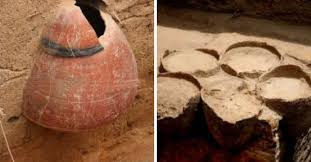
Keezhadi, located near Sivaganga district, has emerged as a key site in the search for ancient Tamil civilization. Excavations have revealed artifacts such as pottery with Tamil Brahmi inscriptions, urban drainage systems, and signs of organized industrial activity. These findings have sparked debates about the possible existence of a literate and urban Tamil society more than 2,000 years ago.
Despite the excitement, Minister Thennarasu urged caution.
“The excavation has produced valuable evidence. But the suggested timeline must be backed by verified scientific data. Right now, that’s under close review,” he said.
Keezhadi and Tamil Heritage
Keezhadi has become a symbol of pride for Tamil Nadu. Many scholars and cultural advocates believe the site could prove that an ancient Tamil civilization existed along the Vaigai River as early as the 6th century BCE. If proven, it could predate many known urban settlements in South Asia.
The idea has ignited emotional and political discussions. Some groups view Keezhadi as proof of Tamil identity being separate from North Indian historical narratives. However, experts stress the need to rely on evidence, not assumptions.
Minister: Let Science Lead
Minister Thennarasu made it clear that the state does not want rushed conclusions. He explained that carbon dating results and interpretations must pass peer review before being accepted.
“We want the world to recognize Keezhadi’s importance. But our findings must be verified, not speculative,” he said.
He also revealed that a team of experts from archaeology, history, and science fields is examining the findings. Their goal is to create a reliable, evidence-based narrative around Keezhadi’s timeline.
Differences Between State and Central Agencies
Initially, the Archaeological Survey of India (ASI) led the excavation. Later, the Tamil Nadu State Department of Archaeology took over. The change happened after some disagreements surfaced over the interpretation of the findings.
While the state’s department leaned toward linking Keezhadi with ancient Tamil culture, ASI remained cautious. Some officials warned against assigning dates or cultural labels without multi-layered scientific support.
A Sensitive Cultural Debate
Keezhadi has stirred strong emotions among the people of Tamil Nadu. Many see the site as proof of their ancient roots and cultural depth. Activists and politicians, especially from the Dravidian movement, have used Keezhadi to promote regional identity.
Posters, documentaries, and online campaigns often frame Keezhadi as a historical counterpoint to northern-dominated narratives. While this brings attention to the site, it also adds pressure on researchers.
Some scholars worry about the politicization of the excavation. “History must reflect facts, not political agendas,” said a Chennai-based archaeologist who requested anonymity. “Keezhadi deserves recognition, but let’s wait for conclusive evidence.”
Next Steps in the Keezhadi Study
The Tamil Nadu government has promised transparency and academic honesty in handling the excavation. It plans to:
- Send more samples for carbon dating
- Involve international labs in the verification process
- Publish the final report after thorough peer review
- Encourage academic collaboration with universities and research institutes
Thennarasu also mentioned plans to turn the site into a knowledge center or museum. This would allow students and the public to learn directly from the archaeological discoveries.
The Bigger Picture
Keezhadi represents more than an excavation. It challenges long-held beliefs about South Indian history. The findings could reshape how we understand ancient Tamil society, its literacy, and its level of urban development.
But experts agree on one thing: bold claims need strong evidence. Timelines must come from dated samples, not theories. Every artifact, every inscription must be examined in a scientific context.
Conclusion
Keezhadi continues to spark curiosity and pride across Tamil Nadu. As the government reviews the excavation report, the focus remains on facts over assumptions. Minister Thennarasu’s remarks reflect a responsible approach—one that values science and scholarship over quick headlines.
In a time when history often intersects with politics, Keezhadi reminds us of the importance of patience and precision. The full story is still unfolding, and Tamil Nadu is committed to telling it right.