Key to CPI(M)’s Bengal revival plans, Minakshi Mukherjee now in party’s Central Committee
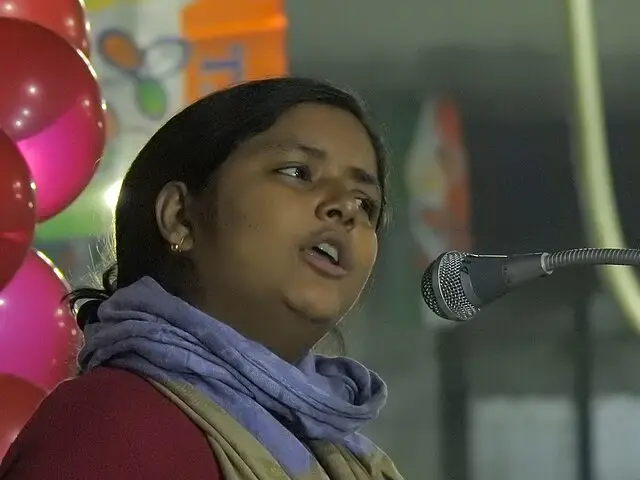
Minakshi Mukherjee’s Rise Signals CPI(M)’s Push for Youth-Led Revival in Bengal
Minakshi Mukherjee has stepped into the CPI(M)’s Central Committee, marking a major shift in the party’s Bengal strategy. Her inclusion highlights the Left’s push to engage younger voters and rebuild from the ground up. At 40, Mukherjee represents a new wave of leadership shaped by activism, discipline, and street-level engagement.
From Grassroots to Central Command
Mukherjee began her journey with the Democratic Youth Federation of India (DYFI) in 2008. At that time, CPI(M) had already started losing its political grip on West Bengal. Despite the challenges, she remained committed. Her work in local units, backed by her strong oratory, quickly earned her recognition.
By 2018, she had become the DYFI’s state president and a member of CPI(M)’s state committee. Her political career continued to grow, and in 2021, she became the DYFI state secretary — a role she still holds today.
A Bold Voice in Bengal Politics
Mukherjee’s reputation grew as she led protests on various issues. She stood at the frontlines during the R G Kar Medical College agitation and the Sandeshkhali protests. Her active role in the Anis Khan case also drew attention.
In 2021, the CPI(M) fielded her from Nandigram against Mamata Banerjee and Suvendu Adhikari. Though she didn’t win, she polled 2.74% of the vote. This number mattered because it affected the tight margin between the winner and runner-up. At just 36 years old, she had already made a national impact.
The Personal Side of a Political Journey
Mukherjee hails from Chalbalpur village in Paschim Bardhaman. Her political roots run deep. Her father works with the All India Kisan Sabha, and her mother is active in the CPI(M)’s women’s wing. Politics wasn’t a career choice — it was part of her upbringing.
She earned her master’s degree in political science from Burdwan University. Soon after, she devoted herself fully to party work, moving through DYFI ranks with determination.
Fighting for the Future of the Left
Speaking after her appointment to the Central Committee, Mukherjee said that what matters in CPI(M) isn’t position but purpose. “Whether in a local branch or the Central Committee, our fight remains the same — against the RSS and its allies,” she said.
She stressed that the party’s focus on youth doesn’t mean older leaders are sidelined. “Age isn’t the only factor. It’s about combining youthful energy with experience. That’s how we connect with today’s generation,” she added.
CPI(M)’s Revival Strategy Gets a Youth Push
CPI(M)’s recent rallies, including one at the Brigade Parade Ground in Kolkata, showcased this youth-driven focus. Alongside Mukherjee, leaders like A A Rahim, Himagnaraj Bhattacharya, Kalatan Dasgupta, and SFI’s Srijan Bhattacharya were spotlighted.
The party seems serious about rejuvenating its base and projecting a younger, dynamic image. Mukherjee stands at the center of this transformation.
Women Leaders Take the Spotlight
Mukherjee isn’t the only woman joining the Central Committee this year. Kaninika Ghosh, state secretary of the All India Democratic Women’s Association (AIDWA), has also been inducted. Their presence signals a stronger commitment to gender representation within the party.
New Faces from Bengal Join the Central Committee
Several other leaders from Bengal have also made it to the CPI(M)’s top body. Saman Pathak, a trade unionist from Darjeeling and son of former Central Committee member Ananda Pathak, joins the group. Syed Hussain from Purba Bardhaman and Debabrata Ghosh from Hooghly are also among the new additions.
Their inclusion shows the party’s focus on rebuilding in Bengal — once its stronghold — through local leaders with grassroots connections.
Conclusion
Minakshi Mukherjee’s rise within the CPI(M) comes at a critical moment. The party is working hard to bounce back in West Bengal. Her mix of activism, youth appeal, and ideological clarity makes her a key player in that plan.
By embracing younger leaders and empowering women, CPI(M) signals that it is ready for change. Mukherjee’s journey reflects the kind of leadership the party hopes will guide it into a new era.