Myanmar frees around 4,900 prisoners to mark traditional new year
Myanmar Grants Amnesty to 4,900 Prisoners, But Political Detainees Remain in Custody
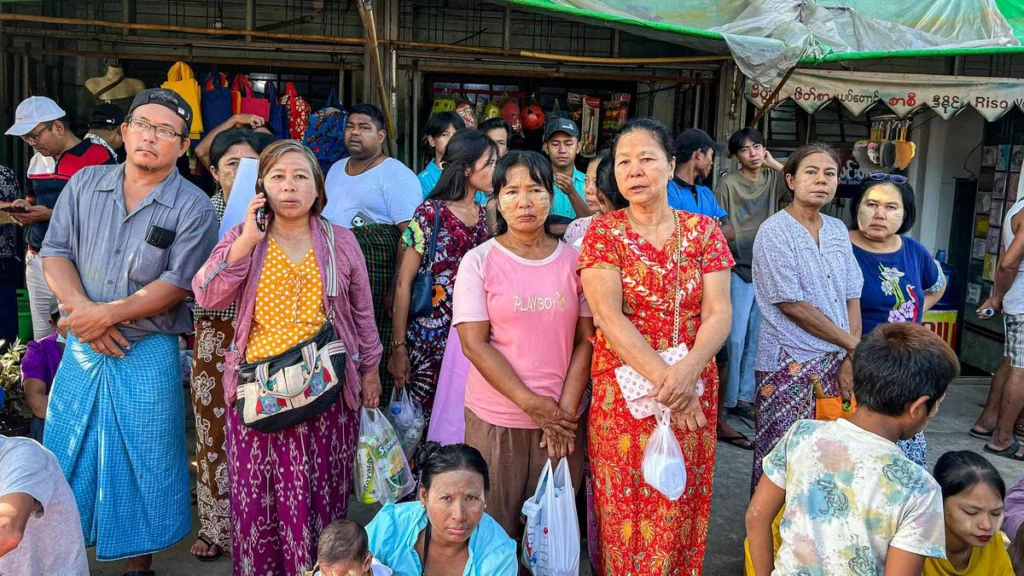
On Thursday morning, the scene outside Insein Prison, located on the northern outskirts of Yangon, Myanmar’s largest city, was filled with anticipation. Relatives and friends of prisoners gathered outside the main gate, waiting for any news of their loved ones. Many had waited for hours, hoping to hear that their family members would be released. The military government’s announcement of an amnesty granted the release of 4,900 prisoners to mark Myanmar’s traditional New Year, bringing brief relief to many families.
However, uncertainty surrounded the announcement. While the government revealed the amnesty, it did not specify how many of the released prisoners were political detainees—those imprisoned for opposing the military regime. This ambiguity raised concerns among human rights organizations and political activists, who have long demanded the release of all political prisoners. The uncertainty also fueled suspicion that the government was using the amnesty to distract from the ongoing issues of political repression.
Myanmar’s Political Crisis and the Role of Political Prisoners
Myanmar has been in a state of turmoil since the military junta overthrew the elected government in February 2021. The junta has cracked down on protests, arrested thousands of opposition figures, and tried to stifle dissent. In the aftermath of the coup, the military arrested pro-democracy activists, journalists, and civilians, subjecting many to prolonged detention without trial.
Political prisoners remain at the heart of Myanmar’s struggle for democracy. These individuals were arrested for their participation in anti-coup protests or for expressing dissent against the military. As of recent reports, over 1,000 political prisoners remain incarcerated in Myanmar, many facing harsh conditions. The military’s unwillingness to release these prisoners highlights its refusal to acknowledge the legitimacy of opposition and its continued repression of basic human rights.
The amnesty granted on April 17, 2025, raised questions about whether it would include political detainees. The lack of clarity surrounding this issue points to the military’s continued refusal to address the broader concerns of its critics. Amnesty may provide temporary relief for some prisoners, but it fails to address the underlying issues of political repression that continue to affect many detainees.
The Amnesty Announcement and Its Ambiguity
The amnesty, announced by Myanmar’s military government, aims to release 4,900 prisoners as part of the traditional New Year celebrations. Myanmar has a long history of granting amnesties during this time, with the government often using the gesture to ease public dissatisfaction. While the release of prisoners is welcome, the lack of transparency regarding the inclusion of political detainees leaves many questions unanswered.
For many, this amnesty represents an opportunity for the government to regain some goodwill in the face of growing international criticism. However, without a clear commitment to releasing all political prisoners, the move feels more like a symbolic gesture. Critics argue that the amnesty does little to address the ongoing political crisis in Myanmar and merely serves to divert attention from the military’s continued grip on power.
Human rights organizations, such as Amnesty International and Human Rights Watch, have long called for the immediate release of political prisoners. The failure to include these individuals in the amnesty undermines any hope for meaningful change and reinforces the military’s stance on dissent. It is clear that the junta is more focused on maintaining control than addressing the political grievances that have sparked widespread resistance.
Political Prisoners: A Symbol of Myanmar’s Struggle for Democracy
The situation of political prisoners in Myanmar is dire. These individuals represent the broader struggle for democracy in the country. Many have been detained for simply voicing their opposition to the military junta. Some have been held for months without trial, while others have faced torture and abuse in detention.
For many of these prisoners, the ongoing battle for freedom is personal. They are activists, journalists, and ordinary citizens who dared to challenge the junta’s rule. Their detention represents a broader violation of human rights in Myanmar, where the military has systematically silenced opposition voices. The failure to release political prisoners reflects the junta’s continued refusal to recognize the will of the people and engage in dialogue with its critics.
Political prisoners in Myanmar are often subject to harsh treatment, including solitary confinement, torture, and inadequate medical care. Many detainees have been denied access to legal representation, and their families often receive little to no information about their whereabouts or condition. These conditions illustrate the junta’s disregard for basic human rights and its determination to maintain control at all costs.
The Role of the International Community
The international community has consistently condemned Myanmar’s actions and imposed sanctions on the military junta. However, these measures have not led to any significant change. The junta continues to exert its control over the country, with little regard for international criticism. Human rights organizations have also stepped up their calls for the release of political prisoners, emphasizing the importance of ending political repression in Myanmar.
While the international community can exert pressure on the military regime, the situation remains uncertain. Myanmar’s political crisis is complex, and finding a peaceful resolution will require a comprehensive approach. The international community must continue to support Myanmar’s pro-democracy movements and work toward ensuring that the military is held accountable for its actions.
In addition to sanctions, global human rights organizations have called for the release of political prisoners as a necessary step in restoring democratic governance in Myanmar. The country’s path to democracy will be difficult, but the release of political prisoners could mark an important step toward healing the wounds of the past.
Conclusion: Moving Forward with Hope and Justice
While the amnesty granted by Myanmar’s military government provides temporary relief for some, it does little to address the underlying issues of political repression. The failure to include political detainees in the release is a clear indication that the junta is not ready to engage in meaningful dialogue with opposition groups. Until the military is willing to release all political prisoners and allow for democratic reforms, Myanmar’s road to peace and stability will remain long and uncertain.
For the people of Myanmar, the fight for freedom continues. Pro-democracy activists and political prisoners stand as symbols of resistance against the military’s tyranny. As long as the junta refuses to acknowledge the will of the people, the struggle for democracy will persist. The international community must continue to support Myanmar’s people in their fight for justice and help ensure that the military junta faces accountability for its actions.