Parliament to hold 32-hour special discussion on Operation Sindoor next week: Kiren Rijiju
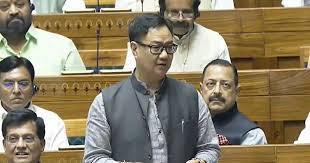
Union Parliamentary Affairs Minister Kiren Rijiju has confirmed that the Indian Parliament will hold a 32-hour special discussion on Operation Sindoor and the recent Pahalgam terror attack. The debate will take place next week, split into 16 hours each for the Lok Sabha and Rajya Sabha. This marathon session will allow political parties to voice their concerns and discuss India’s security policies in depth.
When and How the Debate Will Happen
The Lok Sabha will conduct its discussion on Monday, July 28, 2025. The Rajya Sabha will follow on Tuesday, July 29, 2025. Defence Minister Rajnath Singh will lead the debate, and Prime Minister Narendra Modi is likely to deliver his remarks.
Kiren Rijiju said the extended time aims to encourage constructive discussions rather than political confrontations. “This issue concerns national security, and the House should speak with one voice,” Rijiju stated.
Operation Sindoor: Background and Importance
Operation Sindoor was launched after the April 22 terror attack in Pahalgam, which killed several civilians and security personnel. The Indian armed forces carried out the operation to dismantle terror infrastructure across the border.
The government describes the operation as a strategic step in India’s fight against terrorism. Military experts believe Operation Sindoor has shifted India’s counter-terror approach from defensive to proactive.
The name “Sindoor” signifies sacrifice and resilience. It reflects the country’s determination to protect its borders and citizens at all costs.
Government’s Strategy and PM Modi’s Role
Defence Minister Rajnath Singh will outline the planning and success of Operation Sindoor in both Houses. He will highlight how the operation aligns with India’s zero-tolerance policy towards terrorism.
Prime Minister Narendra Modi is also expected to address Parliament during the closing phase of the debate. He will likely emphasize the bravery of India’s armed forces and the strategic gains of the operation. Modi may also call on all parties to support the government’s national security initiatives.
Opposition’s Response
The Opposition has welcomed the debate but demands more transparency. Leaders such as Mallikarjun Kharge and Derek O’Brien want detailed briefings on the operation’s objectives and results.
Some parties have expressed concerns about the risk of escalating tensions with neighboring nations. They also seek better coordination between intelligence agencies to prevent attacks like the one in Pahalgam.
Why the Discussion Matters
This 32-hour session is not just a parliamentary exercise. It is a test of India’s political unity in matters of national security.
Past debates on similar topics often ended in political clashes. However, Operation Sindoor demands a more serious and bipartisan approach. Security analysts believe this debate can shape India’s future policies against terrorism and cross-border threats.
Public Reaction and Strategic Signals
The public has strongly supported the government’s decision to hold a dedicated session. Social media users are urging politicians to rise above party lines.
Experts have praised the government for allocating ample time for debate. They say long, detailed discussions can lead to better security policies and stronger consensus.
International observers are closely monitoring the debate because Operation Sindoor has regional implications, especially for South Asia’s stability.
Conclusion
The upcoming 32-hour special discussion on Operation Sindoor and the Pahalgam terror attack is a historic moment in India’s Parliament. Leaders like Rajnath Singh and Narendra Modi will share critical details, while the Opposition will voice its concerns.
This session is a chance for all parties to show unity against terrorism. The nation expects responsible debate and actionable outcomes that strengthen security and reinforce India’s position against cross-border threats.