440 drones, 26 missiles: Russian attack on Ukraine kills 15, injures 116
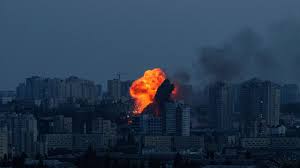
In a large-scale offensive early Monday, Russia launched a staggering 440 drones and 26 missiles across several regions of Ukraine, in one of the most intense aerial attacks since the war began. The death toll has reached 15, with 116 others injured, as Ukrainian cities and infrastructure came under relentless fire.
A Night of Terror
According to the Ukrainian Air Force, most of the Shahed-type drones targeted Kyiv and surrounding areas, while ballistic and cruise missiles struck cities such as Kharkiv, Dnipro, and Odesa. Air raid sirens wailed through the night as families took shelter underground.
“We were woken up by explosions around 3 a.m.,” said Yulia Kovalenko, a resident of Kyiv. “The house shook. It felt like the sky was falling.”
Hospitals Overwhelmed, Rescue Operations Ongoing
Ukrainian emergency services reported that many of the wounded sustained injuries from flying debris and collapsing buildings. In Kharkiv, a missile hit a residential apartment block, trapping several families. Firefighters and rescue teams worked through the early hours to pull survivors from the rubble.
Hospitals in Dnipro and Zaporizhzhia are struggling to cope with the influx of injured. Ukraine’s Health Ministry has issued an urgent appeal for blood donations and medical supplies.
Ukraine’s Response
The Ukrainian Air Defense Force reported shooting down 388 drones and 18 missiles, a record interception rate. However, the sheer volume of projectiles overwhelmed defense systems in certain regions. Ukrainian President Volodymyr Zelenskyy condemned the assault, calling it “another war crime” and vowed retaliation.
“Our air defenses are strong, but they cannot protect every roof from this scale of terror,” he said in a morning address. “We need more help from our allies—more systems, more missiles, more unity.”
International Condemnation and Support
World leaders have swiftly condemned the attack. U.S. Secretary of State Antony Blinken described it as “an inhuman escalation,” pledging continued support to Ukraine, including advanced air defense systems.
European Union leaders, including German Chancellor Olaf Scholz and French President Emmanuel Macron, have called for an emergency meeting to discuss increased sanctions on Russia and fast-tracking defense aid to Kyiv.
Targets: Civilian Areas and Power Infrastructure
Initial reports suggest the primary targets were civilian infrastructure and power grids, causing widespread blackouts in southern and eastern Ukraine. Odesa’s port, vital for grain exports, was also struck, threatening global food supply chains.
Escalation Fears Grow
The attack comes just days after NATO confirmed that additional military exercises would be conducted in Eastern Europe. Military analysts suggest the barrage could be a signal of Russia’s intent to escalate its summer campaign or to retaliate against Ukraine’s recent cross-border operations.
Humanitarian Crisis Deepens
The United Nations Office for the Coordination of Humanitarian Affairs (OCHA) has warned of a worsening crisis. Thousands have been displaced as homes were destroyed, and aid workers are facing dangerous conditions while delivering supplies.
Conclusion
This latest Russian attack on Ukraine marks a new chapter in the conflict, pushing the war further into civilian life and prompting renewed international urgency. With casualties rising and infrastructure crumbling, the global community is once again faced with the challenge of responding to a conflict that shows no sign of de-escalation.