Why mid- and small-cap stocks witnessed selling pressure while Sensex, Nifty closed flat
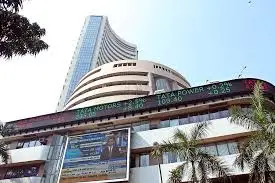
Mid- and Small-Cap Stocks Under Pressure Amid Market Caution
The Indian equity benchmarks, Sensex and Nifty, ended Thursday’s session (June 20) on a subdued note, closing marginally lower. However, the spotlight was on the intense selling pressure seen in mid- and small-cap stocks. While the large-cap indices managed to stay afloat, broad market indices painted a starkly different picture.
The BSE Midcap and Smallcap indices dropped sharply by 1.2% and 1.5%, respectively, indicating strong profit booking and growing investor caution. This divergence raises questions about market sentiment, sectoral dynamics, and valuation concerns in the broader market space.
Key Reasons Behind the Mid- and Small-Cap Selloff
1. Valuation Concerns
One of the most cited reasons for the sharp decline in small-cap stocks is stretched valuations. Over the past year, small- and mid-cap indices have significantly outperformed the benchmark indices. This rally pushed valuations to unsustainable levels for many stocks, making them vulnerable to corrections.
Market experts have repeatedly flagged that many small-cap stocks are trading at earnings multiples far higher than their historical averages. With limited earnings visibility and rising input costs, the premium was becoming hard to justify.
2. Profit Booking Ahead of Uncertainty
Investors appear to be booking profits, especially in sectors that had seen exponential gains over the last few quarters. The general election-led optimism had already been priced in by many mid- and small-cap counters. Now, with the new government settling in and budget announcements expected soon, market participants are cautious, preferring to lock in gains before any potential policy surprises.
3. Rising Global Volatility
Global cues have also turned somewhat negative. The US Fed’s hawkish tone, persistent inflationary pressures in developed markets, and geopolitical uncertainties in Europe and the Middle East have increased global risk aversion. Foreign institutional investors (FIIs) tend to reduce exposure to riskier assets like small caps during volatile times, adding to the selling pressure.
4. Liquidity Rotation to Large Caps
There’s been a visible rotation of funds from broader markets to large-cap names. Institutional investors often prefer safer large-cap stocks in uncertain market phases. This defensive shift is a likely reason why Nifty and Sensex held their ground even as broader indices fell.
This also aligns with recent mutual fund flows, where large-cap schemes have started seeing renewed interest while small-cap funds witnessed outflows or slowed inflows.
Sectoral Impact and Stock Movement
On the sectoral front, stocks in the real estate, consumer durables, and metals sectors were among the worst hit. These sectors had led the small-cap rally in recent months and are now seeing the sharpest corrections.
For example:
- Real Estate stocks like Sobha and Prestige Estates fell between 3–5%.
- Small finance banks such as Ujjivan SFB and Equitas SFB lost traction with declines up to 4%.
- Metal stocks, particularly from the secondary steel segment, also came under pressure amid weak Chinese demand outlook.
On the other hand, select FMCG and pharma large caps held up well, helping cushion the benchmark indices.
Broader Market Breadth Turns Negative
The market breadth on both NSE and BSE turned decisively negative, with more than two stocks declining for every one that gained. This is a critical sentiment indicator and suggests that retail participation, which is typically higher in small-cap counters, may be pulling back.
Volume in the small-cap segment also surged, pointing to panic selling by weaker hands.
Analyst View: A Healthy Correction?
Market veterans believe this correction is not entirely unexpected and could, in fact, be healthy for long-term investors. Here’s what some leading analysts are saying:
- Rahul Shah, Co-Head of Research, Equitymaster: “The mid- and small-cap space had seen one of the most one-sided rallies in the past year. A cooling-off was due, and this should help flush out speculative froth.”
- Mahesh Nandurkar, Head of Research, Jefferies India: “Fundamentally sound small-cap stocks with strong balance sheets and earnings potential will eventually bounce back. The current correction offers a chance to reassess portfolios.”
What Should Investors Do?
Given the volatility, investors are advised to:
- Avoid panic selling: Quality stocks with good management and visibility are likely to recover as fundamentals take precedence over momentum.
- Rebalance portfolios: This is a good time to assess portfolio exposure to small-cap stocks and reallocate towards more stable sectors or large-cap names.
- Wait for clarity: With the Union Budget around the corner, many policy directions will become clearer. Investors might want to hold off on fresh allocations until then.
Looking Ahead
The markets will continue to watch several key triggers in the near term:
- Union Budget 2025: Investors expect reforms and capital expenditure commitments from the new government.
- US Fed commentary: Any indication of rate cuts or continued tightening will impact global fund flows.
- Monsoon progress: A good monsoon is critical for rural demand and could support broader economic growth.
Until then, broader markets may remain under pressure while large caps continue to act as safe havens.
Conclusion
While the Sensex and Nifty ended flat, the sharp selloff in small-cap and mid-cap stocks indicates deeper investor anxiety beneath the surface. Valuation concerns, global volatility, and cautious fund movements are all contributing factors. For long-term investors, this may be a much-needed correction to bring balance and discipline back into the broader market.