3 terrorists killed in forests on Srinagar outskirts
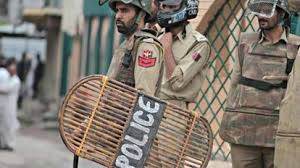
Security forces launched a successful counter-terror operation in the forests near Srinagar on Monday, July 28. The Indian Army, J&K Police, and CRPF jointly conducted Operation Mahadev, leading to the killing of three heavily armed terrorists in the Harwan-Dachigam area.
This offensive followed specific intelligence inputs. Officials confirmed that the terrorists belonged to the Lashkar-e-Taiba, a Pakistan-based terror group.
Intelligence Inputs Spark Swift Action
Early in the morning, a joint team surrounded the forest area after receiving a tip-off. As troops advanced, the terrorists opened fire. Security personnel quickly responded, triggering a fierce encounter.
To strengthen their control, the forces used drones and night-vision gear. These tools helped them track militant movement through the thick forest cover. By late afternoon, all three militants had been killed.
Terrorists Identified, Weapons Recovered
Officials identified one of the terrorists as Suleman Shah, the alleged mastermind behind the Pahalgam attack. The others were Abu Hamza and Yasir, both believed to have supported recent attacks in the region.
Troops recovered several weapons, including an M4 carbine, AK-47 rifles, and grenades. Ammunition and tactical gear were also found at the site.
Direct Link to Pahalgam Massacre
The three slain militants had strong links to the April 22 Pahalgam massacre, where 26 civilians, including tourists, were killed. Shah was reportedly the planner of that deadly attack.
The police had tracked their movements for weeks. Their elimination marks a significant step toward justice for the victims. It also sends a clear message to those aiding cross-border terrorism.
Symbolism Behind Operation Mahadev
The operation’s name, Mahadev, carries deep meaning. It refers to Lord Shiva, a deity known for destroying evil. This symbolism reflects the operation’s goal: to root out terror from Kashmir.
Officials described Operation Mahadev as part of a larger effort. It targets foreign militants hiding in remote forest zones. More such missions are likely to follow.
Political Response and National Security
Leaders across the political spectrum praised the security forces. Many called it a “bold and necessary step” following the Pahalgam attack. Some lawmakers urged the government to maintain pressure on groups operating from Pakistan.
The Parliament also resumed discussions on Operation Sindoor, a broader national plan to prevent terror strikes. The recent success in Srinagar could speed up its rollout.
Civilian Response and Local Measures
In Harwan and nearby areas, people welcomed the operation’s success. “We just want peace,” said Abdul Rahman, a teacher in Harwan. “Killing the terrorists gives us some relief.”
Authorities closed schools and suspended internet services in the area. These actions aimed to prevent panic and block the spread of fake news.
A Turning Point in Counter-Terror Efforts
Security experts believe the elimination of these high-value targets marks a shift. It proves that forces can act swiftly with precision when backed by intelligence.
An Army spokesperson emphasized that more such actions will follow. “We remain committed to ensuring Kashmir’s safety and eliminating terror threats,” he said.
Conclusion: A Strong Blow to Terrorism
The killing of three Lashkar operatives in Srinagar is a major milestone. It brings some closure to the victims of the Pahalgam tragedy. It also boosts the morale of the forces and sends a firm message to terror sponsors.
As Operation Mahadev continues, India’s counter-terror efforts enter a more assertive phase. Through strategic intelligence, quick action, and strong coordination, the forces aim to restore peace in the region.