R G Kar to law college rape case, TMC crisis deepens as Opposition turns up heat
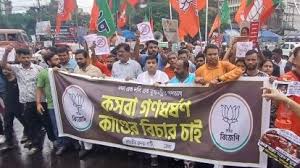
West Bengal’s ruling Trinamool Congress (TMC) is facing a fresh storm. Two recent rape cases—one at R G Kar Medical College and another at a Kolkata law college—have triggered anger across the state. Students are protesting, and the Opposition has launched fierce criticism. The incidents have exposed gaps in campus safety and created a political crisis for the Mamata Banerjee-led government.
The TMC, already under fire for corruption and internal rifts, now struggles with questions about governance and women’s safety.
R G Kar Medical College: Crime Inside the Hostel
The first incident occurred at R G Kar Medical College in North Kolkata. A first-year student accused a senior of drugging and raping her at the hostel. The alleged assault happened during a student party on campus.
The survivor filed a complaint, and police launched an investigation. But the college administration failed to act swiftly. Students claimed the accused had ties to TMC’s student wing, which may have delayed action.
Soon after the news broke online, hundreds of students gathered in protest. They demanded justice, transparency, and better safety inside hostels.
Law College Case: Another Shock for Kolkata
Just as the protests at R G Kar continued, another complaint surfaced. This time, a student from a top law college accused a classmate of rape. The assault reportedly took place off-campus.
Though police arrested the accused, students questioned the delay in official response. The college was also accused of failing to support the survivor. Many said the administration remained silent instead of standing with the victim.
Law students from several colleges held protest marches. They submitted petitions to the Education Minister, urging strict measures to ensure safety and justice.
Opposition Slams TMC: ‘Law and Order Has Collapsed’
Opposition parties moved swiftly to corner the ruling party. BJP leader Suvendu Adhikari blamed TMC for creating a lawless state. He said the government had failed to protect students and women.
Congress’s Adhir Ranjan Chowdhury echoed this view. He claimed West Bengal had become unsafe for women, even on college campuses. CPI(M) leaders added that political interference and impunity had made institutions unsafe.
Opposition parties demanded resignations from key ministers and a judicial probe into both cases. The BJP also announced a state-wide campaign against crimes on campuses.
TMC Responds but Faces Criticism
After days of silence, the TMC finally responded. MP Derek O’Brien said the party follows a “zero-tolerance policy” on crimes against women. Education Minister Bratya Basu promised action and urged the colleges to cooperate with the police.
Despite these statements, criticism remains strong. Many pointed out that Chief Minister Mamata Banerjee had not spoken publicly about the cases. Her silence, they said, reflected a lack of urgency or concern.
Students Unite: ‘We Want Safe Campuses’
The student community has led the fight for justice. At R G Kar and the law college, students held candlelight vigils and sit-ins. Posters reading “Our campus is not a crime scene” and “We want justice” appeared across hostels and social media.
One medical student said, “We are not protesting politics. We are demanding our basic right to safety.”
Students across party lines stood together. Many accused college authorities of being more loyal to political leaders than to their own students.
Impact on TMC’s Public Image
These incidents have dealt a serious blow to the TMC’s public image. The party has long promoted itself as a champion of women’s rights. But the silence and delayed responses have created a gap between promises and action.
With local elections approaching, the party now faces questions from young voters. Political analysts say these cases may not shift votes dramatically but will hurt the TMC’s credibility.
The perception that powerful student leaders are being protected could alienate neutral voters.
Call for Real Change, Not Just Reactions
These rape cases have done more than just trigger protests. They have exposed deep flaws in campus security and institutional response. Students and civil society are now demanding lasting reforms.
There is growing pressure to depoliticize college administrations and enforce strict safety protocols. Activists are calling for fast-track courts and mental health support for survivors.
The message from students is clear: justice must be swift, and campuses must be safe zones.
Conclusion:
The TMC is facing a leadership test. These crimes demand more than statements — they need action, reform, and accountability. As protests grow and the Opposition pushes harder, the ruling party must act decisively or risk losing public trust. For the survivors and students leading the fight, this is about more than politics — it’s about creating a safer, more just future.