‘Rebalancing trade agreements’: White House defends Trump tariffs against ‘activist judges’ ruling
The Biden-era White House rarely finds itself defending policies tied to former President Donald Trump. Yet, in a surprising twist driven by political and legal momentum, the White House has thrown its support behind the controversial tariffs imposed by Trump during his presidency — and is taking a strong stance against a recent federal court decision that ruled those tariffs unlawful.
At the heart of the conflict is a debate over presidential power, economic nationalism, and what the administration calls the necessary “rebalancing of trade agreements.”
The Court’s Blow to Tariff Policy
Earlier this week, the U.S. Court of International Trade ruled that several of the Trump-era tariffs — which were expanded significantly under the guise of national security — violated constitutional boundaries. The court held that Trump had overstepped his authority by continuing and expanding tariffs without proper congressional oversight or renewal under existing trade laws.
The case, brought forward by a coalition of small importers and business groups, argued that Trump’s unilateral use of tariffs hurt American consumers and violated the separation of powers between Congress and the executive branch. In a 2-1 decision, the court agreed, stating that the actions breached the intent of the International Emergency Economic Powers Act (IEEPA) and the Trade Expansion Act of 1962.
The court emphasized that while presidents do have leeway in times of economic or security crises, that power is not limitless.
White House Pushes Back: “Judicial Overreach”
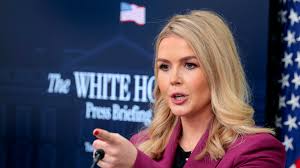
Within hours of the court’s ruling, the White House issued a fiery response. Press Secretary Karoline Leavitt didn’t hold back, describing the decision as a clear example of “judicial overreach.” She said the President “will not sit idly by while activist judges attempt to dismantle the tools used to protect American workers.”
“The Trump tariffs were about protecting American manufacturing, leveling the playing field, and ending decades of lopsided trade,” Leavitt stated. “This ruling undermines the authority of the presidency to act swiftly in the face of economic threats.”
Despite the fact that the tariffs originated under the previous administration, President Biden’s economic team has retained several of them — particularly those on Chinese imports — as a bargaining chip in ongoing negotiations and supply chain reshuffling.
A Strategic Rebalance of Global Trade
The tariffs in question, originally imposed under Section 232 and Section 301 trade provisions, were framed as necessary to address unfair trade practices, especially from China, and to protect American steel and aluminum industries. Trump expanded these to cover hundreds of billions of dollars’ worth of goods, citing national security and economic independence.
Critics have long argued that these measures raised prices for U.S. businesses and consumers, but supporters say they pressured foreign governments to revisit trade agreements more favorable to U.S. interests.
“We’re not just defending Trump’s policies — we’re defending America’s right to protect itself economically,” said National Economic Council head Kevin Hassett. “Rebalancing trade agreements is about restoring fairness, not isolationism.”
Appeal Filed, Supreme Court in Sight
The Justice Department quickly filed an emergency appeal after the ruling. A temporary stay has been granted, allowing the tariffs to remain in place while the case moves through the legal system. Many believe the issue could reach the Supreme Court, given its constitutional implications.
Legal scholars are divided. Some believe the court acted responsibly by reaffirming Congress’s exclusive role in setting tariffs. Others argue that modern global crises — including pandemics, wars, and economic coercion — require the executive branch to act with flexibility.
“This case will test the outer limits of presidential power over trade,” said law professor Emily Watson of NYU. “The outcome could reshape how the U.S. handles trade policy for decades.”
Political Calculations and Global Reactions
Domestically, the case has re-ignited partisan debate. While some Democrats have criticized the original tariffs, others — particularly those from industrial regions — support maintaining them as leverage in trade talks. Republicans, meanwhile, are rallying behind Trump’s approach and warning of “globalist judges” trying to undo economic protections.
Abroad, the ruling has drawn mixed reactions. Trade partners like the European Union and Canada have welcomed the decision, hoping it will lead to a reduction in import duties. However, China’s foreign ministry took a cautious approach, simply noting that it expects the U.S. to abide by international trade rules.
Some economists warn that the legal uncertainty could rattle markets, especially in industries heavily affected by tariffs, like electronics, automotive parts, and steel.
What Happens Next?
As the appeal process unfolds, the Biden administration faces a tricky balancing act — defending executive authority while managing the political baggage of Trump’s economic legacy. With the 2024 presidential election still fresh in political memory and 2028 already in early focus, the outcome of this legal battle could influence both policy and campaign narratives.
Will the courts ultimately strike down one of the most significant elements of Trump’s economic agenda? Or will the administration — despite ideological differences — preserve tools it now sees as essential to navigating an unpredictable global economy?
For now, the tariffs stay. And so does the tension between America’s executive, judiciary, and legislature over who truly controls the nation’s trade future.